


The automatic car wash sector in Australia presents a compelling business proposition, driven by urbanisation, convenience-seeking consumers, and the increasing value placed on maintaining vehicle appearance. For aspiring entrepreneurs and existing car wash operators considering expansion or technology upgrades, understanding the costs associated with automatic car wash machinery is the foundational step in a viable financial model. The price of an automatic car wash machine is not a monolithic figure; rather, it represents a multifaceted investment heavily influenced by technology, capacity, ancillary systems, and ongoing operational considerations specific to the Australian market.
A deep dive into this topic is essential for anyone seeking to transition from concept to operation. This guide explores the diverse landscape of automatic car wash machine pricing in Australia, breaking down the major cost drivers, exploring key system types, and placing equipment costs within the broader framework of a total capital expenditure (CapEx) for a modern, competitive facility.
The Foundation: Primary Types and Base Pricing of Automatic Car Wash Machines
The Australian market primarily features three core types of automated systems, each presenting a different cost, capacity, and risk profile: In-Bay Automatic (IBA), Tunnel Car Wash Systems, and Self-Serve Systems (which often integrate some automated functions).
1. In-Bay Automatic (IBA) Car Wash Systems
In-Bay Automatic car wash systems, often found at fuel stations or standalone properties with limited space, typically accommodate one car at a time within a single wash bay. The equipment moves around a stationary vehicle.
-
Touchless IBA Car Wash (Laserwash, etc.): These rely solely on high-pressure water and strong chemicals, eliminating physical contact with the vehicle.
-
Cost Estimate (Machine Only): AUD $100,000 – $250,000.
-
Features: Higher cost is associated with advanced tracking sensors, specialised nozzle manifolds, high-pressure pumps, sophisticated chemical application systems, and faster cycle times. They require a simpler foundation and are favoured where paint protection is a high customer priority.
-
-
Soft-Touch/Friction IBA: These systems utilise brushes and soft cloths, providing a more aggressive, yet still automated, clean.
-
Cost Estimate (Machine Only): AUD $120,000 – $280,000.
-
Features: Increased component costs for physical brushes, electronic drive systems, and a more complex control apparatus compared to a basic touchless unit.
-
Key Advantage: Lower land requirement, simpler site development, and often cheaper initial acquisition than tunnels.
2. Conveyor (Tunnel) Car Wash Systems
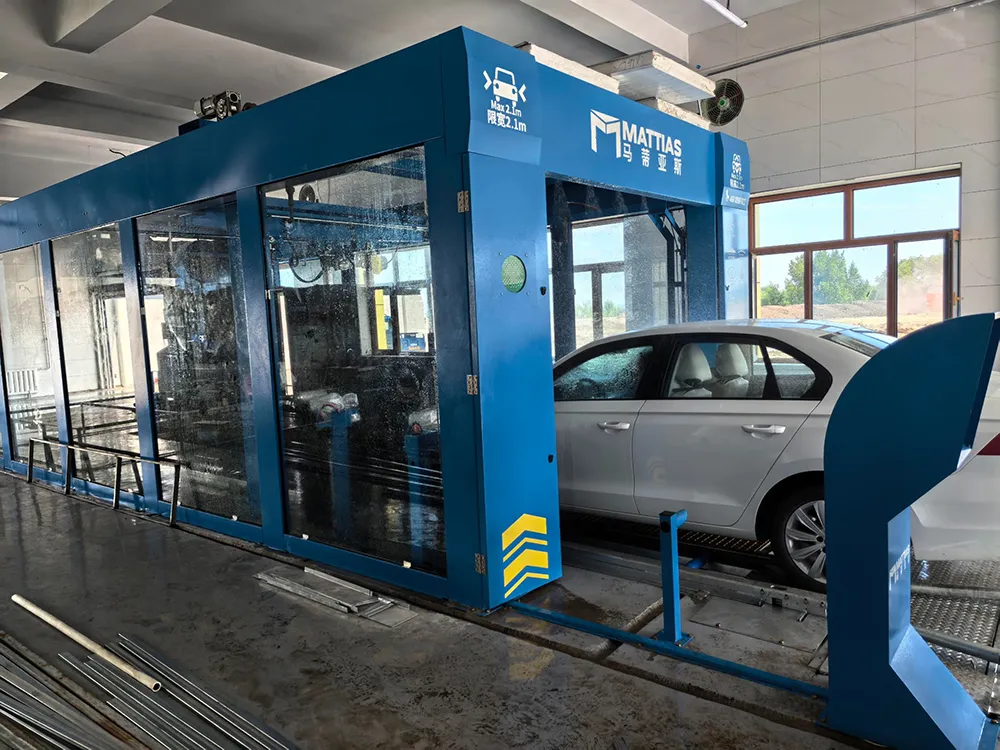
Tunnel systems represent the high-volume model. Vehicles are placed on a conveyor belt and pass through a series of specialised, stationary modules for washing, rinsing, and drying. This is a larger investment tailored for sites with high traffic or greater revenue expectations.
-
Express Tunnel (up to 50-70 cars per hour): A streamlined model, typically focused on external wash with vacuum islands as optional extras.
-
Cost Estimate (Equipment Only – basic to premium): AUD $400,000 – $1,500,000+.
-
Features: Pricing varies dramatically based on the length of the tunnel, number of modules (e.g., wrap-around brushes, foam baths, high-velocity blowers, applicators for special coatings/sealants), and the sophistication of the conveyor and diagnostic systems.
-
-
Full-Service/Hybrid Tunnel: Longer tunnels that incorporate pre-cleaning, internal detailing add-ons, and sophisticated custom options.
-
Cost Drivers: High capital outlay driven by extensive mechanical apparatus, sophisticated water management, increased drying power (which contributes to high power requirements), and greater site preparation costs.
-
Key Advantage: Significantly higher throughput and capacity, translating directly to higher peak-hour revenue potential.
3. Self-Serve Wash Bays
While not entirely “automatic,” a self-serve car wash site requires purchasing and installing high-pressure pumping stations, wash equipment (wands, foaming guns), boom arms, payment systems, and essential peripherals like vacuums.
-
Cost Estimate (Per Bay, Fully Equipped): AUD $40,000 – $70,000.
-
Factors: Primarily depends on the quality of pumps (high-volume industrial quality), inclusion of sophisticated multi-function selectors (foam brush, tri-foam, wax), and integrated modern payment technologies.
-
Beyond the Price Tag: Major Cost Modifiers and Associated CapEx
The final installed cost for an operational car wash far exceeds the list price of the primary machine. Savvy investors must factor in essential ancillary equipment and site development costs unique to the Australian environment.
A. Essential Ancillary Equipment (30% to 50% of Main Machine Cost)
-
Water Treatment and Reclamation Systems: A necessity in most Australian states due to water restrictions and rising utility costs, particularly for environmental compliance. A high-quality water reclaim system (reducing fresh water usage by 60%–90%) can range from AUD $30,000 to over $100,000 depending on the complexity (e.g., reverse osmosis filtration for spot-free rinse).
-
Chemical Delivery Systems: Automated chemical mixing and injection systems are required for consistent, cost-effective product use. Cost varies based on complexity and number of products managed.
-
Drying Equipment: High-velocity drying systems are crucial for customer satisfaction, adding substantial cost, especially for tunnels. Industrial-grade blowers can be an additional AUD $15,000 – $40,000 per unit or set, plus their associated significant electrical infrastructure.
-
Point-of-Sale (POS) and Payment Systems: Integrating automated payment, RFID/NFC, mobile payments, and sophisticated management software is vital. A modern system can cost AUD $10,000 – $50,000 per site.
-
Vacuum Stations: Essential revenue drivers. Multi-function commercial vacuum and fragrance/shampoo vending units cost AUD $5,000 – $15,000 per unit.
B. Infrastructure and Installation (The X-Factor in Australian Pricing)
The machine’s price is a fraction of the fully installed and ready-to-operate price. Australian construction and service costs are a significant driver of overall CapEx:
-
Site Preparation and Civil Works: Includes foundations, drainage trenches, essential grit traps (required for separating sediment and often regulated by local councils), utility trenches, and concrete pads. This is a non-negotiable and substantial cost varying entirely on site condition.
-
Installation Labour and Freight: Moving large, complex machinery from international ports (or Australian assembly centres) to the final site, coupled with specialist labour (plumbers, electricians, certified installers), is a high variable cost, particularly for remote sites. Expect 10%–20% of the equipment price for installation and initial commissioning.
-
Electrical Infrastructure and Power Upgrades: Car wash machines, particularly tunnel systems with multiple dryers and high-pressure pumps, have immense power requirements. Site specific electrical upgrades, often requiring new transformers and dedicated high-voltage cabling to meet demand, can be a major unexpected expense.
-
Environmental and Regulatory Compliance: The cost of engineers’ reports, planning approvals, council contributions (to local wastewater systems), specialized licenses, and mandatory inspections for water quality and drainage add tens of thousands to the budget before the first wash. This regulatory burden is a specific high-cost item in Australia.
Cost Analysis by Market Segment and Revenue Goal
An effective budget is directly tied to the desired market position and revenue capacity.
| System Type | Throughput (Cars/hr) | Total Estimated Equipment & Core Ancillaries CapEx (AUD) | Ideal Site Characteristic |
| Touchless In-Bay Automatic | 8 – 12 | $180,000 – $350,000 | Low land footprint, service station add-on, lower traffic roads. |
| Friction/Hybrid In-Bay | 10 – 15 | $200,000 – $400,000 | Mid-sized dedicated car wash, better cleaning required than pure touchless. |
| Express Tunnel (Short to Mid) | 35 – 70 | $700,000 – $1,200,000 | High-traffic arterial roads, dedicated car wash site with focus on speed and volume. |
| Self-Serve Bays (3 bays + 5 vacs) | N/A (variable) | $150,000 – $300,000 | Multi-service site, areas with high residential vehicle ownership, often requires minimal staff. |
Note: The costs above exclude land acquisition, significant construction (e.g., building enclosure), significant earthworks, and specialized marketing/branding, which often add an equivalent sum again to the project’s total cost.
Strategic Investment Considerations and Total Cost of Ownership (TCO)
A business plan cannot be founded on just the machine price; TCO provides the necessary financial realism.
A. Manufacturer Support and Warranty
Purchasing locally supported machines is critical in Australia. Equipment failures often mean lost revenue, making quick service and accessible spare parts non-negotiable. Established suppliers with local offices or certified partners may have higher initial pricing, but the reduction in potential downtime justifies the premium. Warranties, service level agreements (SLAs), and remote diagnostic capabilities are part of the ‘true’ price.
B. Energy and Water Efficiency
Given the high utility costs in Australia, a machine’s operating expenditure (OpEx) is crucial. A machine that is 20% cheaper to buy but consumes 30% more power and water than its competition will become dramatically more expensive over its 5–10 year lifespan. Look for equipment with high-efficiency motor drives, smart system power management, and highly effective water reclaim ratings (Liters per car washed). Investing in a Reverse Osmosis (RO) water treatment system, though an upfront CapEx cost, substantially lowers chemical usage and increases the wash quality, yielding better customer loyalty.
C. Lifecycle Management (Resale and Upgrades)
Choosing globally recognised or proven Australian market brands ensures that your asset retains better resale value, simplifying exit or upgrade strategies. Moreover, look for modular or upgradable designs. Tunnels, in particular, allow new wash processes, different cleaning solutions, or even ceramic coatings to be added or swapped without replacing the entire infrastructure, future-proofing the business.
Conclusion: A Strategic Investment for the Australian Market
The price of an automatic car wash machine in Australia serves as the opening act to a much larger financial commitment. While a competitive base price for a tunnel system starts well into the six figures and IBA systems begin at the lower end of that range, a complete, operational, and regulatory-compliant facility requires diligent capital expenditure on essential peripherals like water reclamation, efficient drying systems, and robust POS integration.
The successful car wash investment decision should always balance the initial price (CapEx) against the long-term operating costs (OpEx), efficiency, throughput capability, and the ability of the chosen technology to support the business’s projected customer service quality and revenue model. For those committed to establishing a dominant, profitable, and modern car wash in the dynamic Australian market, a meticulous analysis of the total investment is non-negotiable.
Frequently Asked Questions (FAQs) for Car Wash Machine Investment in Australia
-
What is the general price range for a fully installed In-Bay Automatic (IBA) car wash system in Australia?
For the machine and core ancillary equipment (not including land/construction), a good quality IBA (Touchless or Friction) will typically range from AUD $180,000 to over $400,000, depending heavily on the inclusion of high-end water reclaim and spot-free rinse systems. -
How much more expensive are Tunnel Car Wash systems compared to IBA systems?
Tunnel systems are significantly more expensive due to higher capacity and complexity. A full Express Tunnel (equipment and core peripherals) usually starts around AUD $700,000 and can easily exceed $1.5 million, before the costs for land, large-scale civil works, and building enclosure. -
Are water treatment and reclamation systems mandatory for Australian car washes, and what is their approximate cost?
While specific mandates vary by local council and state, water reclamation is virtually essential in Australia due to water restrictions and OpEx costs. The cost for a quality, effective water reclaim system is generally in the range of AUD $30,000 to $100,000 or more, with an additional investment often required for reverse osmosis (RO) units for a spot-free finish. -
What non-machine costs drive the highest total capital expenditure (CapEx) in Australia?
Beyond the main machine, the highest CapEx costs are typically driven by site acquisition (land/lease), comprehensive site development and civil works (foundations, grit traps, drainage), large-scale electrical upgrades necessary for powerful dryers/pumps, and the associated engineering reports, permits, and regulatory compliance fees. -
How critical is machine efficiency (power and water usage) when budgeting for an Australian car wash?
Machine efficiency is critically important and directly impacts long-term profitability. Given Australia’s high utility prices and climate challenges, lower initial costs for a machine may be quickly negated by high water and electricity consumption. Total Cost of Ownership (TCO) analysis, which accounts for efficiency, should outweigh the initial purchase price consideration. -
Does local manufacturer support influence the price, and why is it important in Australia?
Local support often slightly increases the initial machine price but is highly justified. Due to Australia’s vast distances, readily available service technicians, locally stocked spare parts, and immediate manufacturer support minimise costly operational downtime. Choosing a provider with a proven, strong Australian presence reduces business risk.