


Understanding Automatic Car Wash Technology and Systems
Automatic car washes have evolved significantly over the past decade, incorporating advanced technology and refined processes to deliver superior cleaning results. We recognize that modern vehicle owners require efficient, effective cleaning solutions that protect their investment while maintaining convenience.
Types of Automatic Car Wash Systems
Touchless Car Wash Systems: The Premium Choice
Touchless car wash systems represent the pinnacle of automated vehicle cleaning technology. These systems utilize high-pressure water jets, specialized detergents, and advanced spray patterns to remove dirt, grime, and contaminants without physical contact with the vehicle’s surface. The absence of brushes or cloth materials significantly reduces the risk of scratches, swirl marks, and paint damage.
Modern touchless systems employ sophisticated sensor technology to map vehicle dimensions and adjust spray patterns accordingly. The multi-stage cleaning process typically includes pre-rinse, soap application, high-pressure wash, spot-free rinse, and drying cycles. Premium touchless facilities often feature undercarriage washing capabilities, which manually washing at home cannot effectively achieve.
Friction-Based Car Wash Systems: Traditional Approach
Friction-based automatic car washes utilize soft-cloth materials, foam brushes, and rotating cylinders to physically clean the vehicle’s surface. While these systems can provide thorough cleaning for heavily soiled vehicles, they carry inherent risks of surface damage. The cloth materials, despite regular maintenance, can accumulate debris particles that act as abrasives against paint surfaces.
We observe that friction-based systems have improved considerably with the introduction of microfiber materials and gentler cleaning mechanisms. However, the fundamental risk of surface contact remains, making these systems less suitable for vehicles with premium paint finishes or protective coatings.
Hybrid Car Wash Systems: Combining Technologies
Hybrid automatic car wash systems integrate both touchless and friction-based elements to optimize cleaning effectiveness while minimizing damage risk. These systems strategically apply friction elements only where necessary, such as for stubborn contaminants, while using touchless methods for general cleaning.
The hybrid approach allows for the use of milder detergents compared to purely touchless systems, as the physical cleaning action reduces the need for harsh chemicals. This balance creates an effective compromise between thorough cleaning and surface protection.
Comprehensive Analysis of Automatic Car Wash Advantages
Enhanced Cleaning Technology and Efficiency
Modern automatic car wash facilities have incorporated cutting-edge technology that delivers superior cleaning results compared to traditional methods. Computer-controlled systems ensure consistent application of detergents, precise water pressure regulation, and optimal contact time for maximum cleaning effectiveness.
The speed advantage of automatic car washes cannot be overstated. A complete wash cycle typically ranges from 3-8 minutes, compared to 30-60 minutes for thorough hand washing. This time efficiency makes automatic car washes particularly valuable for busy professionals, fleet operators, and urban dwellers with limited time for vehicle maintenance.
Water Conservation and Environmental Benefits
Automatic car wash facilities demonstrate significant environmental advantages through water recycling systems and controlled usage. Professional facilities typically use 40-50 gallons of water per wash cycle, compared to 80-140 gallons for home washing. Advanced reclaim systems filter and reuse water, reducing overall environmental impact.
The controlled chemical usage in automatic facilities prevents harmful runoff into storm drains and waterways. Professional-grade detergents undergo proper treatment and disposal, contrasting with home washing where soaps and chemicals flow directly into local water systems.
Consistent Quality and Professional Results
Automated systems eliminate human error variables, ensuring consistent cleaning quality regardless of operator fatigue or skill level. The standardized process guarantees that every vehicle receives identical treatment, from pre-rinse through final drying.
Professional automatic car washes maintain equipment regularly and replace cleaning materials according to manufacturer specifications. This maintenance ensures optimal performance and reduces the likelihood of equipment malfunction that could damage vehicles.
Accessibility and Convenience Factors
Automatic car washes provide 24/7 availability in many locations, accommodating diverse schedules and urgent cleaning needs. The widespread availability of automatic facilities makes vehicle maintenance accessible to urban residents without access to suitable home washing areas.
Weather independence represents another significant advantage. Automatic facilities operate effectively in various weather conditions, providing consistent service regardless of temperature, humidity, or precipitation. This reliability ensures regular vehicle maintenance schedules remain uninterrupted.
Detailed Examination of Automatic Car Wash Disadvantages
Potential for Vehicle Damage and Surface Harm
Despite technological advances, automatic car washes retain inherent risks of vehicle damage. Mechanical components can malfunction, causing scratches, dents, or other surface damage. Loose vehicle parts, including antennas, mirrors, and trim pieces, face potential damage from high-pressure water jets or mechanical contact.
Paint surface damage remains a primary concern, particularly with friction-based systems. Even well-maintained cloth materials can create micro-scratches and swirl marks that accumulate over time, degrading paint clarity and gloss. These microscopic damages become more visible under direct sunlight and can reduce vehicle resale value.
Chemical Exposure and Paint Degradation
Automatic car wash facilities often utilize industrial-strength chemicals formulated for maximum cleaning efficiency rather than surface protection. These alkaline-based detergents effectively remove stubborn contaminants but can strip protective waxes, sealants, and even factory clear coat over time.
The high pH levels in some automatic wash chemicals can cause oxidation and etching on unprotected paint surfaces. Regular exposure to these harsh chemicals accelerates paint degradation, leading to premature aging and reduced protective capabilities of the vehicle’s finish.
Water Quality and Spot Formation Issues
Municipal water supplies used in automatic car washes frequently contain high mineral content, including calcium, magnesium, and other dissolved substances. These minerals deposit on vehicle surfaces during the drying process, creating water spots that become increasingly difficult to remove over time.
The rapid drying systems in automatic facilities, while efficient, can accelerate mineral deposit formation. Hot air blowers and heated drying chambers intensify evaporation rates, concentrating minerals on the vehicle surface and creating stubborn white spots that resist normal cleaning methods.
Limited Customization and Personalization
Automated systems cannot adapt to specific vehicle needs or owner preferences. Vehicles with delicate finishes, special coatings, or unique cleaning requirements may not receive appropriate treatment. The standardized approach cannot account for individual vehicle conditions or targeted cleaning needs.
The inability to perform detailed cleaning tasks, such as interior detailing, engine bay cleaning, or specific stain removal, limits the comprehensive care that automatic systems can provide. These limitations necessitate additional services or manual intervention to achieve complete vehicle maintenance.
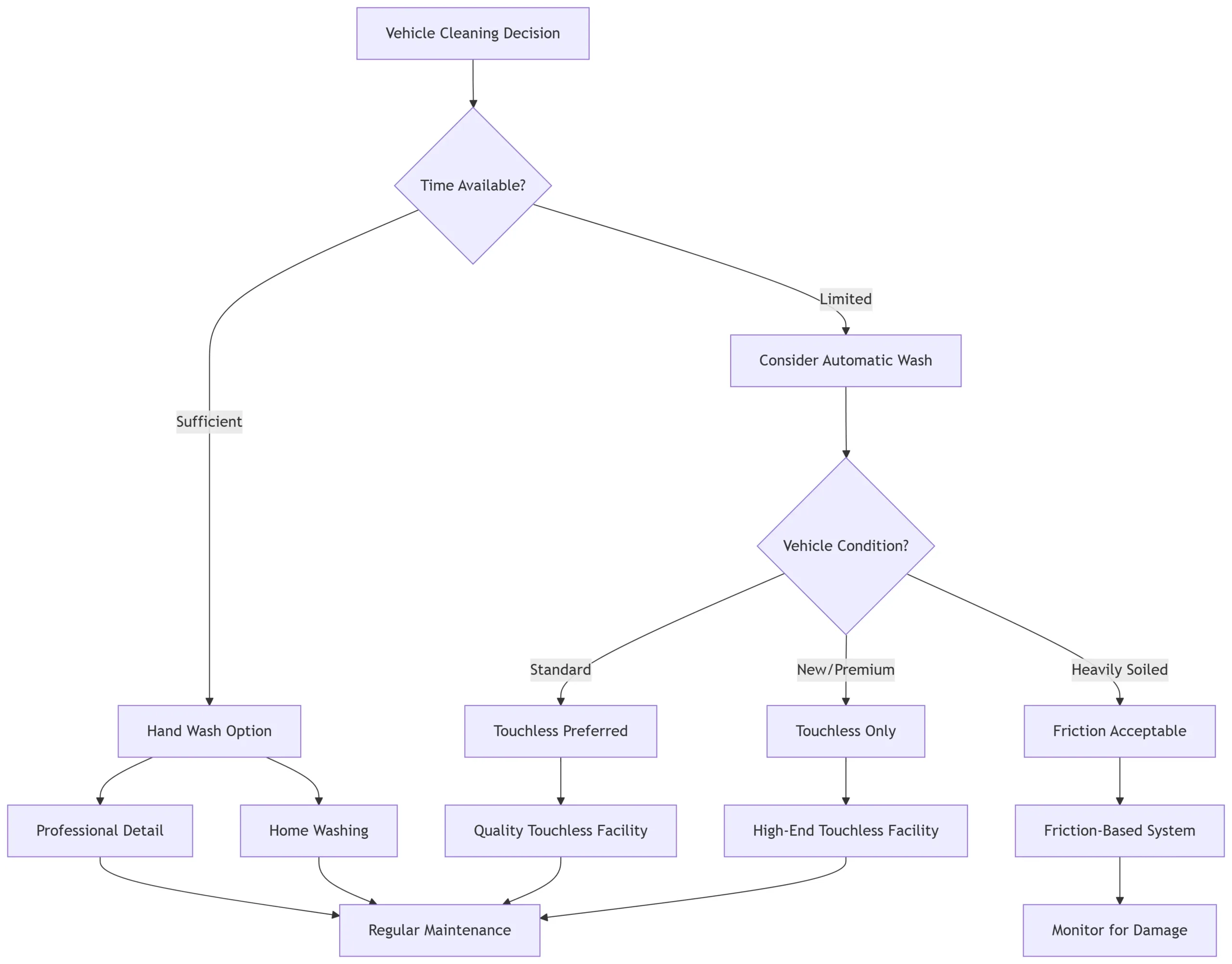
Automatic Car Wash Decision Matrix
Best Practices for Automatic Car Wash Usage
Pre-Wash Preparation and Vehicle Assessment
Before utilizing any automatic car wash facility, conduct a thorough vehicle inspection to identify loose parts, existing damage, and areas requiring special attention. Remove or secure external accessories, including bike racks, roof boxes, and loose trim pieces that could detach during the wash process.
Clear the vehicle interior of loose items that might shift during the wash cycle. Close all windows completely and ensure sunroof seals are properly engaged. Retract or secure the antenna if manually operated, and verify that all exterior lights function correctly.
Selecting the Optimal Automatic Car Wash Type
Choose touchless systems whenever possible, particularly for vehicles with premium finishes, ceramic coatings, or paint protection films. Research local facilities to identify those with the best equipment maintenance records and customer satisfaction ratings.
Avoid automatic car washes during peak hours when equipment may be overtaxed and cleaning solutions depleted. Early morning or late evening sessions often provide better cleaning results due to reduced facility usage and fresher cleaning solutions.
Post-Wash Inspection and Maintenance
Immediately after the automatic wash cycle, perform a comprehensive vehicle inspection while still at the facility. Document any new damage and report concerns to facility management promptly. This immediate action provides the best opportunity for damage compensation and facility improvement.
Address water spots immediately using appropriate spot-removal techniques. The longer mineral deposits remain on the vehicle surface, the more difficult they become to remove. Carry quick-detail spray and microfiber towels for immediate spot treatment.
Frequency and Timing Considerations
Establish an appropriate washing frequency based on driving conditions, climate, and vehicle usage patterns. Vehicles exposed to harsh environments may require more frequent cleaning, while garage-kept vehicles in mild climates need less frequent attention.
Consider seasonal factors when planning automatic car wash visits. Winter months with road salt exposure require more frequent cleaning, while summer months with increased insect activity may necessitate specialized pre-treatments.
Advanced Automatic Car Wash Technologies
Sensor-Based Vehicle Recognition Systems
Modern automatic car wash facilities incorporate advanced sensor technology that maps vehicle dimensions and adjusts cleaning parameters accordingly. These systems identify vehicle height, width, and length to optimize spray patterns and pressure settings for maximum cleaning effectiveness while minimizing damage risk.
Optical sensors detect vehicle position throughout the wash cycle, ensuring precise application of cleaning solutions and rinse water. This technology prevents over-spray and ensures complete coverage of all vehicle surfaces.
Eco-Friendly Chemical Formulations
Progressive automatic car wash facilities have adopted biodegradable, environmentally-friendly cleaning chemicals that maintain effectiveness while reducing environmental impact. These formulations break down naturally without harming local water systems or wildlife.
pH-balanced cleaning solutions provide effective cleaning while minimizing paint damage risk. These gentler formulations require longer contact times but offer superior surface protection compared to traditional alkaline-based chemicals.
Water Reclamation and Recycling Systems
Advanced automatic car wash facilities utilize sophisticated water treatment systems that filter, purify, and reuse wash water. Multi-stage filtration removes contaminants while maintaining water quality standards for effective cleaning.
Reverse osmosis systems produce spot-free rinse water by removing dissolved minerals and impurities. This technology eliminates the primary cause of water spots and provides superior finishing results.
Automatic Car Wash Facility Evaluation Criteria
Equipment Maintenance and Facility Standards
Evaluate automatic car wash facilities based on visible equipment condition, cleanliness standards, and operational efficiency. Well-maintained facilities demonstrate commitment to quality service and reduced damage risk.
Observe the facility during operation to assess employee knowledge, customer service quality, and problem-resolution capabilities. Facilities with knowledgeable staff and clear damage policies provide better overall service experiences.
Chemical Quality and Safety Standards
Inquire about the types of cleaning chemicals used and their safety certifications. Reputable facilities use automotive-specific formulations designed for vehicle surfaces rather than generic industrial cleaners.
Request information about chemical concentration levels and pH balancing procedures. Facilities that monitor and adjust chemical levels demonstrate professional operation standards and concern for vehicle protection.
Customer Satisfaction and Damage History
Research customer reviews and ratings for automatic car wash facilities in your area. Pay particular attention to damage reports and facility response to customer concerns.
Verify that facilities maintain adequate insurance coverage for potential vehicle damage. Reputable businesses carry comprehensive liability insurance and maintain transparent damage resolution procedures.
Professional Recommendations and Final Considerations
When to Choose Automatic Car Washes
Automatic car washes provide optimal value for regular maintenance washing when time constraints prevent hand washing. They excel at removing general road dirt, light contamination, and maintaining basic cleanliness standards.
Consider automatic facilities for vehicles with protective coatings that reduce damage risk and enhance cleaning effectiveness. Ceramic coatings and paint protection films create barriers that minimize chemical exposure and reduce friction damage potential.
When to Avoid Automatic Car Washes
Avoid automatic car washes for vehicles with delicate finishes, custom paint work, or extensive modifications. These vehicles require specialized care that automated systems cannot provide.
Skip automatic facilities when vehicles are heavily contaminated with tar, tree sap, or other stubborn substances that require manual intervention. Automatic systems may not effectively remove these materials and could spread them across the vehicle surface.
Integration with Comprehensive Vehicle Care
View automatic car washes as one component of a comprehensive vehicle maintenance program rather than a complete solution. Combine automatic washing with periodic hand washing, professional detailing, and protective treatment applications.
Maintain detailed records of automatic car wash usage, including facility selection, service dates, and any observed issues. This documentation helps identify patterns and optimize future service selections.
The decision to use automatic car washes ultimately depends on individual circumstances, vehicle conditions, and personal preferences. When used appropriately and with proper facility selection, automatic car washes can provide effective, convenient vehicle cleaning while minimizing risks and maximizing benefits.