










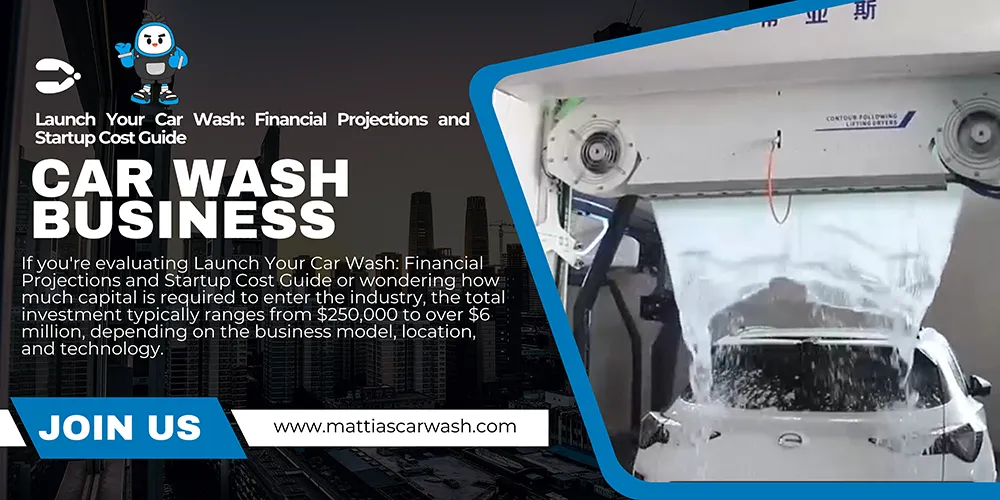

If you’re evaluating Launch Your Car Wash: Financial Projections and Startup Cost Guide or wondering how much capital is required to enter the industry, the total investment typically ranges from $250,000 to over $6 million, depending on the business model, location, and technology. Key cost drivers include land acquisition ($500K–$3M), construction ($800K–$2.5M), equipment ($200K–$1.5M), and soft costs. For investors, focus on cash-on-cash return (20-40%), average ticket price, and capture rate to improve ROI. Avoid underestimating working capital, utility tap fees, or contingency funds—these can make or break profitability.
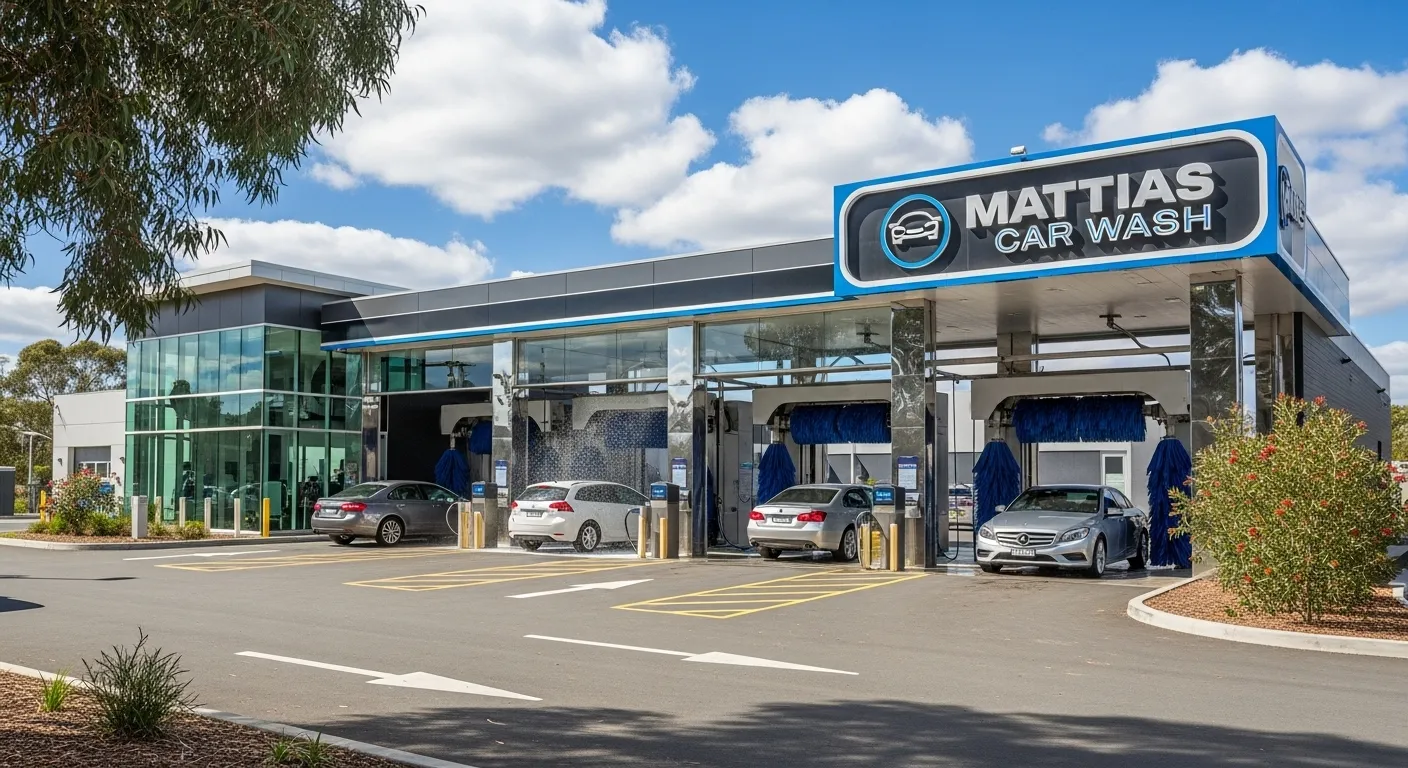
About Launch Your Car Wash: Financial Projections and Startup Cost Guide
Launch Your Car Wash: Financial Projections and Startup Cost Guide refers to the comprehensive process of estimating capital expenditures (CapEx) and operating expenses (OpEx) before breaking ground. Whether planning a self-serve bay, an in-bay automatic, or a high-volume express tunnel, accurate projections are the backbone of securing financing.
The term Launch Your Car Wash: Financial Projections and Startup Cost Guide covers not just the machinery price tag but the full financial ecosystem. When people ask about startup costs, they are usually seeking clarity on the break-even point and debt service coverage ratio (DSCR). This guide breaks down every component affecting cost and value, helping investors, entrepreneurs, and developers make informed decisions based on real-world data and market trends.
Why Launch Your Car Wash: Financial Projections and Startup Cost Guide Is Gaining Popularity
Accurate financial modeling is seeing rapid adoption due to rising interest rates and tighter lending standards. Unlike rough “napkin math,” detailed projections offer a roadmap to profitability and leverage in loan negotiations.
The U.S. car wash industry is projected to grow at a CAGR of 5.5% through 2028, with subscription-based revenue models capturing investor attention due to predictable cash flow. Investors are drawn to the scalable nature of the business—often achieving EBITDA margins of 35–50%—and the ability to depreciate assets for tax benefits.
Types and Variants of Financial Models
Not all Launch Your Car Wash: Financial Projections and Startup Cost Guide scenarios are created equal. Understanding the differences between facility types helps align your investment with your budget.
Self-Service / Wand Wash: Minimalist design focused on low entry cost. Startup costs range from $250,000 to $1M. Ideal for lower-traffic areas where customers prioritize economy ($3–$7).
In-Bay Automatic (IBA): Includes rollover machines and dryers. Priced between $600,000–$1.5M, this model appeals to gas station owners and smaller lots. Lower throughput but runs 24/7 with minimal labor.
Express Tunnel: Equipped with conveyor belts, high-volume reclamation, and vacuum plazas. Costs range from $3.5M–$6M+, targeting high-volume corridors. Requires 150+ cars/day to break even but offers the highest revenue potential.
Each variant impacts initial cost, labor requirements, and revenue ceilings. Simpler bays have lower equipment costs but lower revenue caps. Express tunnels command higher multiples upon exit but require significant upfront liquidity.
Key Features and Specifications to Evaluate
When assessing what to look for in Launch Your Car Wash: Financial Projections and Startup Cost Guide, consider these critical metrics:
-
Capture Rate: The percentage of passing traffic that stops. A healthy rate is 0.5% to 1.5%. Verify traffic counts (AADT) rigorously.
-
Average Ticket Price: The mean revenue per car. Express tunnels aim for $10–$18.
-
Utility Costs: Water and electricity can consume 10–15% of revenue. Top systems recycle 80–90% of water to lower OpEx.
-
Labor % of Gross: Express models aim for <15%, while full-service washes may see 35–45%.
-
Membership Penetration: Recurring revenue from unlimited clubs can cover 100% of operating costs in top-tier locations.
Always request pro forma validation from industry accountants and speak with existing owners before finalizing your budget.
Pros and Cons
Pros:
-
High depreciation benefits (Bonus Depreciation)
-
Scalable recurring revenue via subscriptions
-
Resilient against economic downturns
-
Real estate appreciation over time
-
Predictable margins once volume stabilizes
Cons:
-
High barrier to entry ($3M+ for competitive tunnels)
-
Strict environmental and zoning hurdles
-
Sensitive to weather patterns and seasonality
-
Equipment breakdown can halt revenue instantly
-
Rising labor costs in full-service models
Best suited for investors with liquidity and patience for the permitting phase. Not recommended for those seeking “passive income” without a dedicated operator.
How to Choose Launch Your Car Wash: Financial Projections and Startup Cost Guide
Follow this step-by-step decision framework when exploring Launch Your Car Wash: Financial Projections and Startup Cost Guide:
-
Conduct a Demographic Analysis: Target 30,000+ people within a 3-mile radius with median incomes supporting discretionary spending.
-
Secure Land with High Visibility: Aim for 30,000+ daily vehicles. Corner lots with easy ingress/egress command premiums but pay off in volume.
-
Select Equipment Tier: Match your wash type to the competition. Don’t over-equip a low-volume site.
-
Budget for Soft Costs: Include impact fees, tap fees, architectural drawings, and legal retainers ($200K–$500K).
-
Calculate Working Capital: Set aside 6 months of operating expenses for the ramp-up phase.
-
Plan for Contingencies: Add 10–15% to construction bids for unexpected overruns.
Red Flags to Avoid:
-
Relying on “best case” volume projections
-
Underestimating property tax reassessments post-construction
-
Ignoring the local water moratorium risks
-
Choosing a site with a median or traffic divider blocking access
-
Over-leveraging with high-interest bridge loans
Price & Market Insights
Understanding Launch Your Car Wash: Financial Projections and Startup Cost Guide means looking beyond the sticker price of the machine. Here’s a realistic breakdown of total project costs for a standard express tunnel:
| Cost Category | Range (USD) | Notes |
| Land Acquisition | $800K – $2.5M | Highly variable by location quality |
| Site Work & Civil | $400K – $900K | Grading, utilities, paving, and concrete |
| Building Construction | $900K – $1.8M | Structure, electrical, plumbing, HVAC |
| Wash Equipment | $900K – $1.4M | Conveyor, chemistry, vacuums, POS |
| Soft Costs | $250K – $600K | Permits, architecture, impact fees |
| Marketing & Start-up | $50K – $150K | Grand opening, presale campaign |
| Total Project Cost | $3.3M – $7.35M | Source: Car Wash Advisory, SBA Data 5 6 |
Consumer pricing models are shifting toward memberships. A site with 3,000 members paying $25/month generates $75,000 in recurring revenue before a single retail ticket is sold. Profitability hinges on volume control—processing 100,000+ cars annually is a common benchmark for success.
Top-Seller & Competitive Analysis
While specific pro formas vary, successful financial models share common traits: realistic ramp-up periods, conservative expense ratios, and aggressive marketing budgets.
| Feature | Self-Serve Setup | In-Bay Automatic | Express Tunnel |
| Initial CapEx | $250K – $800K | $600K – $1.5M | $3.5M – $6M+ |
| Cars Per Hour | N/A (Bay limit) | 10–15 | 80–120+ |
| Labor Cost | Very Low | Low | Moderate |
| Avg Revenue/Yr | $50K – $150K | $150K – $400K | $1.2M – $2.5M+ |
| Break-Even | Immediate | 6–12 Months | 12–24 Months |
Choose based on your capital access and management bandwidth. Self-serve suits owner-operators; express tunnels attract private equity and multi-unit developers.
Customer Feedback Synthesis
Based on operator reviews and lender feedback, here are the most frequent insights:
Positive Themes:
-
“The subscription model smoothed out our revenue dips during rainy months.”
-
“SBA 7(a) financing was crucial for covering the construction/interest reserve.”
-
“Investing in a water reclaim system paid for itself in 3 years via utility savings.”
Common Complaints:
-
“We underestimated the cost of chemical usage per car by 20%.”
-
“Impact fees from the city were double what the architect estimated.”
-
“Construction delays ate into our working capital before we opened.”
Operators stress the importance of a 15% contingency fund and vetting general contractors with specific car wash experience.
Sourcing & Supplier Tips
Procuring for a car wash involves multiple partners: real estate brokers, equipment distributors, and chemical suppliers.
-
Work with suppliers who offer site analysis support. Many equipment manufacturers will help validate your traffic counts.
-
Request transparent freight and installation quotes. Avoid hidden “change orders” later.
-
Verify tech support availability. Downtime costs $500+/hour in peak season.
-
For financing, engage lenders familiar with the industry (SBA preferred lenders) who understand the specialized nature of the collateral.
-
Always inspect warranty terms on heavy equipment (chains, blowers, hydraulics).
Use trade shows like The Car Wash Show to compare financial models and POS systems firsthand.
Maintenance, Safety & Legal Considerations
Even after launch, ongoing financial discipline is required:
-
Maintenance: Budget 3–5% of revenue for repairs. Replace hoses, nozzles, and chains proactively to avoid revenue loss.
-
Safety: General Liability insurance is non-negotiable. Slip-and-fall claims are common risks.
-
Legal Compliance: Ensure labor laws are met regarding tips and overtime. ADA compliance for vacuum areas is strictly enforced.
Consult with a CPA specializing in the auto service industry to maximize tax advantages like cost segregation studies.
Conclusion
If you’re evaluating Launch Your Car Wash: Financial Projections and Startup Cost Guide or determining the viability of a site, success depends on data-driven planning and conservative forecasting. For high-traffic locations, a well-capitalized tunnel can deliver strong cash-on-cash returns within 3–4 years. Focus on capture rates, membership retention, and cost control. Avoid rushing into land deals without a granular budget that accounts for every tap fee, permit, and concrete pour.
FAQs
How much cash do I need to start a car wash? Typically, lenders require 15–25% down. For a $4M express tunnel, you need $600K–$1M in liquid capital. Smaller in-bay automatics may require $150K–$300K down.
What is the average profit margin for a car wash? Profit margins vary by type. Express tunnels often see EBITDA margins of 40–50%, while self-serve bays range from 30–40%. Net profit depends heavily on debt service.
How do I calculate ROI for a car wash? Divide annual net profit by total initial cash investment. A robust target is a 20–25% cash-on-cash return, meaning you recoup your down payment in 4–5 years.
Does location impact startup costs? Yes. Real estate in prime retail corridors costs significantly more but drives higher volume. Rural sites are cheaper but have lower revenue ceilings.
Can I get an SBA loan for a car wash? Yes, the SBA 7(a) and 504 loan programs are very popular for car washes due to favorable terms and lower down payment requirements for single-purpose properties.