










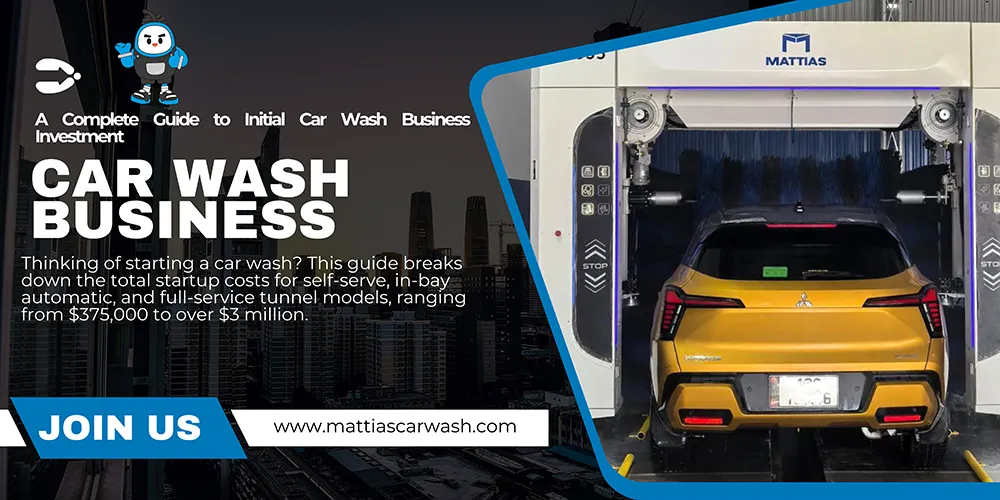

The car wash industry continues to shine as a promising sector for entrepreneurs and investors alike. With millions of vehicles on the road that require regular cleaning, the demand for car wash services remains strong, offering a stable and potentially lucrative business opportunity. However, entering this market requires a thorough understanding of the financial landscape, particularly the initial investment needed to set up a successful business. The total initial investment for a car wash business can vary significantly, ranging from around $375,000 to over $3 million. Most comprehensive, full-service operations typically require an upfront investment of between $1.5 million and $3 million. This significant variance is influenced by factors such as the chosen car wash model, geographical location, scale of operations, and level of technological sophistication. This in-depth guide will explore each car wash model and the various components that contribute to the total start-up expenditure, ultimately helping prospective owners to make informed financial decisions.
Summary
Car wash businesses require significant initial investment ranging from $375,000 to over $3 million, depending on the business model and scale.
The major cost components include land acquisition, construction, equipment, permits, and working capital reserves.
| Expense Category | Cost Range | Notes |
|---|---|---|
| Total Initial Investment | $375,000 – $3,000,000+ | Varies by business model and scale |
| Land Acquisition/Lease | $100,000 – $2,000,000+ | Largest single expense for most operations |
| Construction/Retrofit | $100,000 – $1,000,000+ | $150-$300 per square foot typical |
| Car Wash Equipment | $30,000 – $1,000,000+ | Tunnel systems cost $400,000-$1,000,000+ |
| Licenses & Insurance | $20,000 – $80,000 | Includes permits and first year insurance |
| Utility Setup | $90,000 – $150,000 | Plumbing, electrical, water systems |
| Working Capital Reserve | $50,000 – $500,000 | 3-6 months operating expenses |
Understanding the Different Car Wash Business Models and Their Associated Costs
The car wash industry offers several distinct business models, each with its own operational nuances, target market, and, critically, different initial investment requirements. Identifying the right model for your entrepreneurial vision is the foundational step in financial planning.
1. Self-Serve Car Washes: The Entry Point
Self-serve car washes represent the most accessible entry point into the industry from a capital perspective. These operations provide individual bays where customers can use coin-operated or card-activated equipment to wash their vehicles themselves. They are favored by budget-conscious customers and those who prefer a hands-on approach to vehicle cleaning.
Investment Breakdown for Self-Serve:
-
Equipment Costs: Entry-level self-serve car wash bays can be outfitted for an initial investment ranging from $15,000 to $50,000 per bay. This includes pressure washers, foaming brushes, rinse cycles (including spot-free rinse), wax applicators, and robust vacuum systems. Additional equipment might include vending machines for towels and cleaning products. Some estimates place equipment costs between $10,000 and $20,000 per self-service bay.
-
Facility & Construction: The infrastructure for self-serve car washes is less complex than automated systems, typically involving basic open bay structures, concrete pads, and utility hookups. Minimal building structures might cost around $25,000.
-
Land Requirements: While needing less land than a tunnel car wash, a self-serve facility still requires adequate space for multiple bays, vehicle queues, and vacuum stations. The cost of land is a highly variable factor.
-
Total Initial Investment: For a complete entry-level self-serve car wash operation with multiple bays, the total investment typically falls between $250,000 and $700,000. These lower costs reflect simpler equipment and smaller facility footprints.
Advantages of Self-Serve: Lower initial capital outlay, potentially lower labor costs (often operating with minimal staff or as an unattended business), and simpler maintenance for the owner. The average self-service car wash can generate around $40,000 to $100,000 in annual revenue.
2. In-Bay Automatic Car Washes: Convenience and Automation
In-bay automatic (IBA) car washes, also known as “rollover” washes, allow customers to drive their vehicle into a single bay where stationary equipment moves around the car to clean it. These systems offer a higher level of convenience than self-serve options and are popular choices for integration with gas stations and convenience stores. They generally fall into two categories: touchless car wash (using high-pressure water and chemicals) or soft-touch car wash (using gentle brushes).
Investment Breakdown for In-Bay Automatic:
-
Equipment Costs: The automatic car wash machine for an in-bay automatic car wash system can range from $30,000 to $200,000 for basic systems, with more advanced touchless or soft-touch systems pushing these costs higher. Estimates suggest equipment costs could be between $150,000 and $400,000 per bay.
-
Facility & Construction: A dedicated structure for the single or multiple bays, including proper drainage, water reclaim systems, and often a small equipment room, will be necessary. Minimum building costs could start around $100,000. Construction can vary from $100,000 to $500,000.
-
Land Requirements: IBAs require less linear space than tunnel washes, making them suitable for smaller plots or existing commercial locations, yet still demanding adequate queuing space.
-
Total Initial Investment: An in-bay automatic car wash typically requires a startup capital of $250,000 to $700,000 per bay. This model offers a balance between investment and potential revenue, with average annual revenue ranging from $139,000 to $500,000.
Advantages of In-Bay Automatic: Greater convenience for customers, typically higher revenue per wash compared to self-serve, and relatively low labor requirements, often needing minimal staff or can even be largely unattended. This model boasts a potentially high-profit margin, with some systems generating around a 69% profit margin.
3. Full-Service Tunnel Car Washes: The High-Throughput Model
Full-service tunnel car washes represent the pinnacle of the car wash industry in terms of investment and operational scale. In this model, vehicles are loaded onto a conveyor belt that pulls them through a long tunnel equipped with an array of automated cleaning, rinsing, waxing, and drying stations. These operations often include a component of manual pre-washing and post-washing services, as well as interior detailing options, creating a “full-service” experience. They are designed for high-volume throughput and deliver a premium customer experience.
Investment Breakdown for Full-Service Tunnel:
-
Equipment Costs: This is the most significant component of a tunnel wash. High-end conveyor systems, multiple wash arches, specialized applicators for various chemicals, powerful drying equipment, water treatment and reclaim systems, and robust vacuum systems can easily cost $400,000 to over $1,000,000. Some estimates suggest equipment for a full-service car wash with one automatic in-bay and three self-serve bays can be $400,000 to $450,000, with a full tunnel costing $650,000 and upwards.
-
Facility & Construction: Tunnel washes require large, purpose-built structures to house the extensive equipment and facilitate the conveyor system. Construction costs can range from $1 million to $5 million for acquiring suitable land and building. A basic site might cost $700,000 to build, excluding land. These large-scale constructions involve significant concrete work, plumbing, electrical infrastructure, and environmental controls.
-
Land Requirements: Substantial land is necessary for the long tunnel, extensive queuing lanes, vacuum stations, potential detail bays, and parking for customers and employees. Real estate costs are highly impactful here.
-
Total Initial Investment: A full-service tunnel car wash typically requires a substantial startup capital of $1.5 million to $3 million, though costs can exceed $3 million depending on the location and chosen features. Some reports indicate costs between $2.5 million and $7 million. Despite the high investment, these operations often achieve the highest returns when managed effectively. Average annual profits for full-service car washes can range from $500,000 to $900,000.
Advantages of Full-Service Tunnel: Highest throughput capacity, ability to offer premium services and command higher prices, strong branding opportunities, and typically higher average ticket prices, leading to substantial revenue potential. The average annual revenue for full-service car washes can be $1.8 million per year.
Critical Factors Influencing Total Investment
Beyond the type of car wash, several other variables play a crucial role in shaping the total initial investment.
-
Land and Real Estate Costs: This is often the single largest variable expense.
-
Purchase vs. Lease: Deciding whether to purchase the land or lease it significantly impacts upfront capital. Purchasing builds equity but requires a larger initial outlay, often 15-20% of the total project cost for a down payment. Leasing reduces upfront costs, requiring only a security deposit and first month’s rent.
-
Location: Urban centers or high-traffic commercial areas naturally have higher land costs compared to rural or suburban locales. Market analysis and site selection are paramount, as visibility, traffic counts, accessibility, and competition directly influence both the cost of land and future revenue potential. High real estate costs in urban areas can push total investments well above $3 million.
-
Zoning and Environmental Considerations: Specific zoning regulations and environmental impact assessments can add unexpected costs and delays.
-
-
Construction and Site Development: Preparing the site for operation is a major undertaking.
-
Site Preparation: This includes excavation, grading, foundation work, and laying concrete pads.
-
Utilities: Connecting to essential services like water, electricity, gas, and sewer lines involves significant connection fees and infrastructure installation. Wastewater management is particularly important due to environmental regulations.
-
Building Structures: Depending on the car wash model, this could involve simple overhead canopies, full enclosed bays, or expansive tunnel buildings. Construction costs can be similar to purchasing retail space, ranging between $150 to $300 per square foot.
-
Drainage Systems: Effective water capture and disposal systems, often incorporating grit and oil separators, are essential for environmental compliance.
-
Landscaping and Signage: Aesthetics and clear branding are crucial for attracting customers and typically involve professional design and installation.
-
-
Permitting, Licenses, and Legal Fees: Navigating the regulatory landscape adds to the initial costs.
-
Zoning Approvals: Obtaining necessary permits for commercial operation and specific car wash facilities.
-
Environmental Permits: Car washes have specific wastewater discharge regulations they must adhere to, as wash water can contain contaminants. Permits from state and local environmental agencies are often required for proper disposal and sometimes for water recycling systems.
-
Business Licenses: Standard business operating licenses, sometimes specific to car wash services.
-
Legal Consultation: Engaging legal professionals to assist with property acquisition, zoning, permits, and business structure ensures compliance and protects the investment.
-
-
Working Capital: Essential for bridging the gap between opening day and achieving consistent profitability.
-
Initial Operating Expenses: Covering utilities (water, electricity, chemicals), supplies (soaps, waxes, towels), and marketing for the first few months. Utilities can cost $1,000 to $10,000 per month or more.
-
Payroll: If the operation requires staff, initial payroll expenses need to be factored in until revenue streams stabilize.
-
Contingency Fund: Allocating a percentage of the total budget (typically 10-15%) for unforeseen expenses is a prudent financial strategy.
-
-
Franchise Fees (if applicable): If opting for a franchised car wash model, an additional initial franchise fee will be required, often in the range of $300,000 or more. While adding to the upfront cost, a franchise provides a proven business model, established brand recognition, and comprehensive support.
-
Technology and Software: Modern car washes integrate various technological solutions.
-
Point-of-Sale (POS) Systems: For processing payments, managing memberships, and tracking sales data.
-
Security Systems: Cameras and access control for monitoring the facility.
-
Water Management Systems: Advanced filtration and recycling systems, critical for cost-efficiency and environmental compliance, add to initial costs but save significantly on water over time.
-
Remote Monitoring: Software solutions for overseeing operations and equipment performance.
-
-
Insurance: Essential for protecting your investment from the outset. This includes property insurance, liability insurance, and potentially workers’ compensation.
Financial Planning and Funding Considerations
Given the substantial capital requirements, robust financial planning is indispensable. Developing a comprehensive business plan that includes detailed financial projections for revenue, operating costs, and return on investment (ROI) is crucial for attracting funding. A good ROI for a car wash typically ranges from 20% to 35% annually.
-
Funding Sources:
-
SBA Loans: The Small Business Administration (SBA) offers various loan programs, such as SBA 7(a) and SBA 504 loans, which are often attractive for new car wash investors due to lower down payment requirements, competitive interest rates, and longer repayment terms (up to 25 years). These loans can be secured through private lenders, with the government backing a significant portion of the loan.
-
Traditional Bank Loans: Conventional commercial loans are a common source of funding, typically requiring collateral and a strong business plan.
-
Equipment Financing: Many lenders specialize in financing car wash equipment, offering specific loan products for these capital-intensive purchases.
-
Personal Savings/Private Equity: Self-funding or attracting private investors can also be viable options.
-
-
Feasibility Study: Conduct thorough market research and a detailed feasibility study to understand local demand, competition, traffic patterns, and demographic suitability for your chosen car wash model.
-
Professional Guidance: Engaging with a car wash consultant, financial advisor, and commercial real estate professional can provide invaluable expertise in navigating site selection, equipment choices, and financial structuring.
Conclusion
Starting a car wash business represents a significant financial undertaking, with initial investments varying wildly from hundreds of thousands to several millions of dollars. The choice of business model – self-serve, in-bay automatic, or full-service tunnel – directly dictates the scale of expenditure, particularly concerning equipment and construction. However, beyond the visible machinery, factors such as land acquisition, site development, environmental compliance, and working capital demands are equally critical in determining the total initial investment. By conducting rigorous due diligence, developing a meticulous financial plan, and securing appropriate funding, aspiring car wash owners can successfully navigate these complex startup costs and pave the way for a gleaming and profitable enterprise in this ever-growing industry. The car wash market, projected to grow to over $43 billion by 2029, offers a compelling opportunity for those who are prepared to make the necessary strategic investments.
Frequently Asked Questions (FAQs) about Car Wash Business Investment
1. How much is the total initial investment required to start a car wash business?
The total initial investment for a car wash business can vary significantly, ranging from $375,000 to over $3 million. Entry-level self-serve or in-bay automatic car washes might start from 250,000-700,000. Full-service tunnel car washes represent the highest investment category, typically requiring $1.5 million to $3 million in startup capital.
2. What are the main types of car wash businesses and their approximate startup costs?
- Self-Serve Car Washes: Equipment costs per bay can range from 15,000−50,000. Total initial investment for a multi-bay operation is usually 250,000−700,000.
- In-Bay Automatic Car Washes: Equipment costs for an automatic system range from 30,000−200,000. Total initial investment often falls between 250,000−700,000 per bay, with a total minimum investment for an in-bay automatic car wash of around $250,000 per bay.
- Full-Service Tunnel Car Washes: These demand the highest investment, with tunnel equipment alone costing 400,000−1,000,000+. The total startup capital typically ranges from $1.5 million to $3 million, sometimes exceeding $7 million for large-scale operations.
3. What factors significantly influence the total car wash investment?
Key factors include:
-
Type of Car Wash: As detailed above, different models have vastly different equipment and construction needs.
-
Location & Real Estate: Urban locations with high land costs can push investments well above average, while rural areas may allow for more modest investments. Visibility, traffic, and accessibility are crucial.
-
Scale of Operation: Number of bays, length of the tunnel, and additional services (e.g., detailing, dog washes) increase costs.
-
Equipment Quality & Technology: Choosing basic vs. high-end, energy-efficient, or advanced water reclaim systems.
-
Construction Complexity: Custom builds, extensive landscaping, or unique architectural features add to expenses.
4. What non-equipment and non-real estate costs should I factor into my budget?
Beyond equipment and real estate, significant costs include:
-
Construction & Site Development: Grading, utilities installation, drainage systems, paving, building structures.
-
Permitting & Licensing: Zoning approvals, environmental permits, and business licenses, often requiring legal fees.
-
Working Capital: Funds for initial operating expenses, inventory (chemicals, towels), marketing, and payroll until the business becomes self-sustaining.
-
Insurance: Property, liability, and workers’ compensation insurance.
-
Water Treatment Systems: Environmental regulations mandate proper wastewater treatment, adding to infrastructure costs.
5. How does environmental compliance affect car wash startup costs?
Environmental regulations are crucial. Car washes must implement water treatment procedures to reduce harmful chemicals and sediment in wastewater before discharge. This often requires investing in specialized filtration, oil/grit separators, and potentially water recycling/reclaim systems, which, while increasing upfront costs, can also lead to long-term water savings and compliance. Permits are usually required for wastewater disposal.
6. Is it possible to start a car wash business with less than $200,000?
It is challenging to establish a new standalone car wash business for less than $200,000, particularly if purchasing land and constructing facilities. The absolute minimum entry-level self-serve bays might start around 15,000-50,000 per bay for equipment, but the cumulative costs for multiple bays, land, construction, and permits typically push the total higher. A mobile car wash or acquiring a very small, existing, well-aged operation could potentially fit into a lower budget. Mobile car washes, for example, have significantly lower initial investments, sometimes starting below $50,000.
7. What financing options are available for car wash startups?
Several financing avenues exist:
-
SBA Loans (7(a) and 504): These government-backed loans from private lenders often offer favorable terms, lower down payments, and longer repayment periods.
-
Traditional Bank Loans: Commercial loans from banks and credit unions are common, often requiring collateral.
-
Equipment Financing: Lenders specialize in loans for capital-intensive equipment.
-
Private Equity / Investors: For larger projects, attracting private investment may be an option.
-
Personal Savings: Many entrepreneurs self-fund a portion of their initial investment.
8. What is a typical return on investment (ROI) for a car wash business?
A good ROI for a car wash business typically ranges from 20% to 35% annually, with well-managed operations potentially reaching up to 40%. Self-service facilities usually see ROIs between 15-25%, while in-bay automatic washes often range from 20-30%. Conveyor tunnel systems, despite higher initial investments, generally achieve the highest returns at 25-40% when properly managed and located in high-traffic areas. Most successful operators aim to recoup their full investment within 3-5 years.
9. Are car washes seasonal businesses?
Yes, car washes can be seasonal, especially in climates with distinct weather patterns. In snowy climates, for instance, car owners tend to wash their cars more often in winter to remove salt. Market analysis should consider local climate impacts on potential revenue throughout the year.
10. Why are full-service tunnel car washes so much more expensive to start?
Full-service tunnel car washes require a higher investment due to their scale and complexity. They demand extensive and specialized automated equipment (conveyors, multiple wash modules, powerful dryers, water reclaim systems), larger facilities to house this equipment and long conveyor lines, and substantial land for throughput and queuing. Additionally, the integrated staffing for pre-washing, post-washing, and interior detailing contributes to both initial setup and ongoing operational costs.