










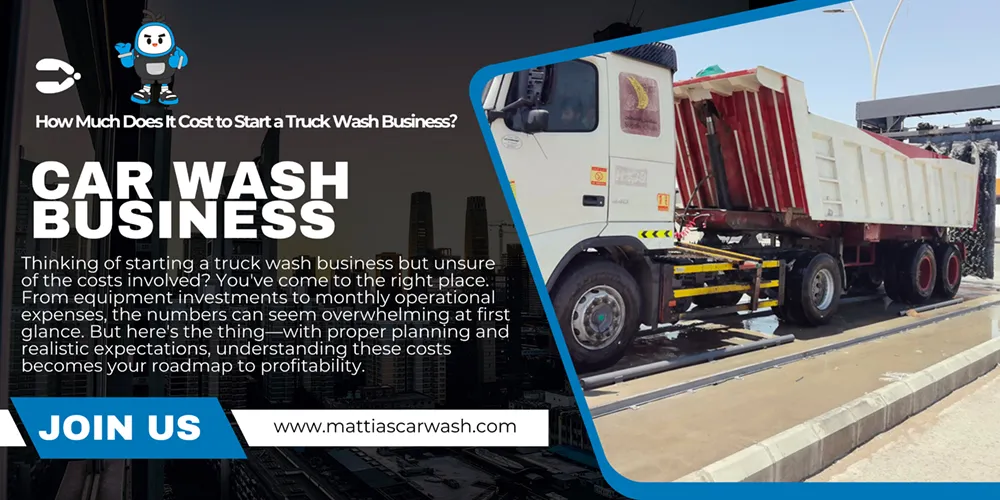

Thinking of starting a truck wash business but unsure of the costs involved? You’ve come to the right place. From equipment investments to monthly operational expenses, the numbers can seem overwhelming at first glance. But here’s the thing—with proper planning and realistic expectations, understanding these costs becomes your roadmap to profitability.
This blog will break down the costs associated with starting a truck wash business, from initial setup to ongoing expenses, and even explore how you can generate revenue. By the time you finish reading, you’ll have a crystal-clear picture of what it costs to turn your truck wash dreams into reality.

Breaking Down Your Initial Investment
The truth about truck wash startup costs? They’re substantial, but they’re also predictable. Smart entrepreneurs know that understanding these upfront expenses is half the battle won. Let’s dive into the major cost categories that will shape your initial budget:
Land and Location Expenses
Your location can make or break your business, and it comes with a price tag to match. Whether you’re eyeing a prime spot near major trucking routes or considering a more budget-friendly option on the outskirts of town, location costs will likely be your biggest single expense.
Leasing typically runs $8,000 to $15,000 monthly for a facility that can handle commercial truck traffic. Purchasing land? Prepare for investments ranging from $75,000 to $750,000, depending on your market and proximity to major transportation corridors.
Equipment Investment
Here’s where many new owners get sticker shock—and rightfully so. Commercial truck washing equipment isn’t your average pressure washer setup. You’re looking at industrial-grade systems designed to handle the biggest rigs on the road.
A complete equipment package runs $75,000 to $200,000 for quality commercial systems. Add in water recycling technology (increasingly essential for environmental compliance), and you’re adding another $30,000 to $75,000 to your tab.
Regulatory and Legal Costs
Don’t underestimate the paperwork. Environmental permits, business licenses, and compliance requirements vary by location but consistently add up.
Budget $1,000 to $8,000 for permits and licensing, depending on your state’s requirements and the complexity of your wastewater management system.

Monthly Operating Expenses You Can’t Ignore
Monthly Operating Costs
| Expense | Cost Range |
|---|---|
| Labor (5-10 staff) | $10,000+ |
| Water/Electricity | $2,000–$5,500 |
| Chemicals/Supplies | $2,000–$5,000 |
| Marketing | $500–$2,000 |
| Maintenance | $100–$250 (monthly avg.) |
Once your doors are open, the bills keep coming. These recurring costs will determine whether your business thrives or merely survives:
Staffing Expenses
Labor represents your largest ongoing investment after location costs. Quality employees make the difference between satisfied customers and one-star reviews.
Full-time staff typically earn $12 to $25 per hour, depending on experience and responsibilities. For a crew of 6 to 12 employees, monthly payroll easily reaches $15,000 to $30,000 when you factor in benefits and taxes.
Utility Costs
Water and power consumption in truck washing operations is substantial. These aren’t residential utility bills—you’re running industrial equipment for extended periods daily.
Water costs alone can hit $1,500 to $4,000 monthly, while electricity for pumps, dryers, and facility lighting adds another $1,200 to $3,500 to your monthly expenses.
Supplies and Materials
Quality cleaning products aren’t optional—they’re what separates your service from a garden hose rinse. Eco-friendly options often cost more upfront but appeal to environmentally conscious fleet operators.
Monthly supply costs typically range from $2,500 to $6,000, scaling with your volume of business and service offerings.
Hidden Costs That Catch New Owners Off Guard
Every experienced truck wash owner wishes someone had warned them about these often-overlooked expenses:
Maintenance and Equipment Replacement
Commercial washing equipment works hard and needs regular attention. Pumps wear out, hoses crack, and electrical components fail—often at the worst possible moments.
Annual maintenance and repair costs typically run $2,000 to $5,000, but smart owners budget extra for unexpected breakdowns during peak seasons.
Insurance Premiums
Protecting your investment requires comprehensive coverage, and commercial truck washing operations face unique risks that standard business policies don’t always cover.
Annual insurance costs range from $8,000 to $20,000, depending on your coverage levels, location, and claims history.
Marketing and Customer Acquisition
Building awareness takes time and money. From digital advertising to relationship-building with fleet managers, marketing expenses are ongoing investments in your future growth.
Monthly marketing budgets of $1,000 to $3,000 help establish your presence and maintain steady customer flow.
Making the Numbers Work for You
Understanding costs is just the beginning—the real skill lies in managing them effectively. Successful truck wash owners focus on controlling expenses while maximizing revenue per customer.
Consider implementing tiered pricing structures that encourage customers to choose higher-margin services. Fleet contracts provide predictable income streams that help offset seasonal fluctuations in individual customer traffic.
Track your cost per wash religiously. This metric reveals whether your pricing covers expenses and generates acceptable profit margins. Most profitable operations aim for 60-70% gross margins after direct costs.
Take the Next Step Toward Your Truck Wash Business
Starting a truck wash business demands a serious financial commitment, but the rewards justify the investment for operators who plan carefully and execute consistently. The key lies in understanding every cost category, planning for contingencies, and maintaining focus on operational efficiency from day one.
Ready to move forward with confidence? Start by creating detailed financial projections that account for all these cost categories—your future self will thank you for the thorough preparation.