






Most car wash equipment failures do not start with a catastrophic event. They start with a skipped inspection, a deferred lubrication, or a filter screen that nobody checked on Tuesday. Industry maintenance data from over 20,000 installations across 40+ countries shows that the majority of unplanned downtime traces back to routine tasks that were missed, delayed, or never scheduled in the first place.
Anthony Analetto, president of Sonny’s CarWash Equipment Division and a 30-year industry veteran, put it simply: “It’s not the big failures that hurt the most — it’s the small stuff that quietly drags down performance and profits.” A pump that runs slightly hotter than yesterday. A blower that leaves a little more water behind each week. A nozzle that has shifted two degrees off alignment. None of these trigger an alarm. All of them erode your margin.
This article breaks down what those “little things” actually are, what they cost when ignored, and how gas stations, fleet operators, car dealerships, and investors can build a maintenance culture that catches problems before they become line items on a repair invoice.

The Real Cost of Skipping the Small Stuff
Before diving into specific habits, it is worth understanding the economics. The cost difference between preventive and reactive maintenance is not marginal — it is structural.
| Maintenance Approach | Cost Per Wash | Annual Cost (100K washes/yr) | What You Get |
|---|---|---|---|
| Preventive (scheduled) | $0.05 – $0.15 | $5,000 – $15,000 | Predictable downtime, planned parts ordering, stable wash quality |
| Reactive (fix when broken) | $0.50 – $2.00 | $50,000 – $200,000 | Emergency service calls, peak-hour shutdowns, customer complaints |
| Difference | 3x – 10x | $45K – $185K | This does not include lost revenue from downtime |
And that lost revenue is significant. During peak hours, every hour of unplanned downtime costs $200 to $500+ in lost wash revenue — before the emergency repair bill. A single Saturday morning conveyor jam can wipe out an entire week’s maintenance budget.
Key insight: The operators who dominate their markets are not the ones with the newest equipment. They are the ones who never skip the 15-minute morning check.

What “Erosion” Actually Looks Like
Analetto’s core argument is that most issues do not hit all at once — they creep in. Here is what that erosion looks like in concrete terms across different equipment types:
| Component | Early Warning Sign | If Ignored | Cost Escalation |
|---|---|---|---|
| Nozzles | Spray pattern slightly uneven; one strip on vehicle not fully rinsed | Mineral buildup hardens; entire manifold pressure drops; pump overworks | $20 nozzle → $500 pump rebuild → $2,000+ manifold replacement |
| Brush foam (EVA) | One section appears compressed or slightly torn | Uneven pressure causes paint scratches on customer vehicles; complaints spike | $150 foam section → customer damage claims → reputation loss |
| Chemical dosing pump | Chemical levels dropping slightly faster than usual | Overdosing wastes $200-$500/month in chemicals; underdosing degrades wash quality | $0 → $3,000-$6,000/year in wasted chemistry |
| Bearing (conveyor/motor) | Slight vibration; motor runs 2-3°C warmer than baseline | Bearing seizes; motor burns out; conveyor stops mid-cycle during Saturday rush | $30 bearing → $800 motor → $2,000+ emergency repair + lost revenue |
| Water reclaim filter | TDS reading creeping up; rinse quality declining slightly | Membrane fouls; reclaim system fails; site switches to 100% fresh water | $50 filter → $2,000 membrane → $500-$1,500/month higher water bills |
| Belt (dryer/blower) | Belt tension slightly loose; drying performance down 5% | Belt slips under load; blower stops; cars exit wet; customer complaints | $25 belt → $400 service call → customer churn |
Every single one of these escalation chains starts with a symptom that costs under $50 to fix and ends with a bill that can exceed $2,000 — plus the revenue lost while the equipment sits idle.
The Daily 15: What Your Morning Check Should Actually Cover
Analetto emphasizes that daily, weekly, and monthly routines are essential — but they are only part of the picture. Based on field data from high-performing sites, here is what a structured daily check should look like. It takes 15-20 minutes at the start of each shift.
Daily Checklist (15-20 minutes)
| # | Task | What You’re Looking For | If Found |
|---|---|---|---|
| 1 | Visual brush inspection | Debris entanglement, uneven wear, compressed or torn foam sections | Remove debris; flag section for replacement if compression visible |
| 2 | Nozzle and spray arch alignment | Each nozzle pointed correctly; spray pattern uniform; no clogging | Realign with wrench; descale with cleaning tool if mineral buildup present |
| 3 | Chemical level verification | Soap, wax, rinse aid, drying agent drums not empty; no air in lines | Refill immediately; check dosing pump calibration if consumption abnormal |
| 4 | Water system pressure check | Incoming pressure within spec (0.5-0.7 MPa); filter screens clear; reclaim cycling | Backwash filters; check for leaks in high-pressure line; inspect pump housing temperature |
| 5 | Safety systems test | Every e-stop functional; photo-eye sensors aligned; entrance gates operate smoothly | Non-negotiable: fix immediately or shut down the bay |
| 6 | Drainage check | Drains and sump pits clear of debris; no standing water in trench | Clear blockage; check for oil sheen indicating equipment leak |
Weekly Checklist (1-2 hours)
- Lubricate chains and moving parts — Use manufacturer-specified grease; over-greasing is as harmful as under-greasing
- Flush chemical lines — Prevent crystallization that causes dosing inaccuracy
- Inspect conveyor system — Check chain tension, inspect for worn rollers, verify corrosion-free chain links
- Test all sensors and control panels — Verify photo-eyes, proximity sensors, and limit switches respond within spec
- Check belt tension — On dryers, blowers, and any belt-driven components
- Review PLC error logs — Even if no alarms triggered, the log may show warnings that were auto-cleared
Monthly Checklist (3-4 hours)
- Measure brush foam height and compare to baseline — replace when wear exceeds manufacturer threshold
- Calibrate chemical dosing pump accuracy — run a measured volume test
- Test water quality (TDS, pH, hardness) — especially critical for water treatment and recycling systems
- Check for water leaks in underground piping
- Conduct deep cleaning of tanks and sumps
- Schedule technician inspection for high-pressure components
Quarterly Checklist (half-day)
- Full mechanical audit of conveyor and drive system
- Motor amperage test across all motors — compare to nameplate specs
- Hydraulic system service: fluid, hoses, seals
- Membrane overhaul for reverse osmosis and reclaim systems
- Dryer/blower airflow measurement
- Full nozzle replacement assessment — nozzles wear gradually and may need wholesale replacement rather than piecemeal cleaning
The discipline test: Can your team produce a completed checklist for every single day of the past month? If there are gaps, that is where your next failure will originate.

Your Team Is Your First Line of Defense
Analetto makes a critical point that many operators miss: outside service technicians — whether they visit weekly, monthly, or quarterly — are not there to replace your staff. Their job is to support them, catching wear and tear your team might miss. The internal team is the first line of defense.
This requires something harder than a checklist: a culture where employees know what “normal” looks like.
What “Knowing Normal” Actually Means
| Sensory Channel | What a Trained Employee Notices | What an Untrained Employee Misses |
|---|---|---|
| Sound | A pump that normally hums at a steady pitch starts producing a faint whine; a bearing that was silent develops a rhythmic tick | Nothing — the sound has always been “there” since they started |
| Sight | Spray pattern from an arch is slightly narrower than yesterday; foam density looks thinner; a small drip under the equipment room that wasn’t there before | Nothing — they never established a baseline to compare against |
| Touch | A motor housing feels 2-3°C warmer than usual; a belt has slightly more give than last week; a chain link feels rough when it should be smooth | Nothing — they don’t touch equipment unless something is broken |
| Smell | Faint electrical insulation odor near a control panel; chemical smell stronger than normal in the equipment room | Nothing — they assume all equipment rooms smell this way |
You cannot hire this awareness. You have to build it. Options include:
- Internal shadowing: New employees spend their first two weeks paired with an experienced operator who narrates what they are checking and why
- Hands-on training programs: Manufacturer-led training sessions — many equipment suppliers offer on-site or facility-based programs
- Baseline documentation: Take photos and videos of each component in normal operating condition; use them as reference during daily checks
- The “three-minute walkaround” habit: Assign one person per shift to walk key components — pumps, arches, brushes, dryer outlets — and note anything that looks, sounds, or feels different from the baseline
The investment in training pays off in two ways: reduced service calls (because your team catches issues earlier) and improved ownership (because employees who understand the equipment take pride in keeping it running).
Smart Systems: When Technology Becomes Your Second Set of Eyes
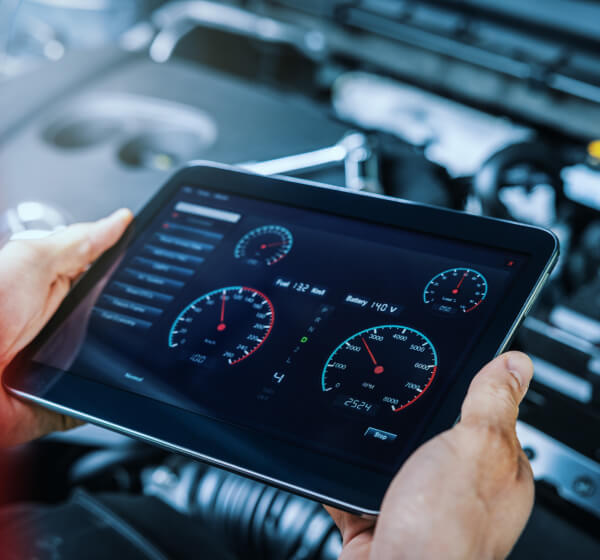
Analetto describes modern control systems — PLCs (Programmable Logic Controllers), motor control centers (MCC), cameras, and sensors — as tools that “listen” and “predict.” He shares a concrete example: a PLC flagged a kilowatt spike on a motor, and a quick inspection revealed a failing bearing that would have shut the site down within days.
This is not science fiction. It is the current state of modern car wash equipment. Here is what today’s monitoring technology actually delivers:
| Capability | What It Does | Real-World Impact |
|---|---|---|
| Real-time fault detection | Pressure loss, dosing line air lock, sensor failure → automatic alert to operator’s phone | Reduces mean-time-to-detect from hours (customer complaint) to minutes (system alert) |
| Predictive maintenance | Tracks pump runtime, valve actuation counts, pressure curves over time to forecast wear | Reduces unplanned downtime by 40-60% (industry data across multiple monitoring platforms) |
| Energy and chemical reporting | Records water, electricity, and chemical consumption per wash program | Enables per-wash cost optimization; identifies dosing drift before it affects quality |
| Motor amperage monitoring | Continuous measurement of motor current draw against baseline | Detects bearing wear, belt slippage, and mechanical drag before failure |
| Multi-station management | Single dashboard for revenue, occupancy, and equipment status across all sites | Allows chain operators to benchmark sites and deploy maintenance resources efficiently |
| Automatic wash parameter adjustment | When a component is underperforming, the system modifies wash parameters to maintain quality until repair | Prevents customer complaints during the window between detection and repair |
Important caveat
No remote monitoring system replaces physical inspection. Sensors detect parameter deviations — they do not see a cracked hose clamp, a misaligned brush arm, or debris wedged in a roller. The most effective sites use technology to prioritize which physical inspections to perform, not to eliminate them. A PLC can tell you a motor is pulling 8% more current than baseline. Only a human walking the tunnel can tell you why.
Uptime Is the New Marketing
Analetto’s most commercially oriented point is also his most overlooked: what customers remember is a clean, dry, shiny car delivered quickly and consistently. A single bad wash experience — streaks, water spots, or a closed sign during peak hours — can break trust that took months to build.
In an era where membership and subscription models drive 40-70% of revenue at top-performing express sites, every downtime event has a compounding cost:
- Direct revenue loss: $200-$500+/hour during peak periods
- Membership churn: Members who arrive to find a closed wash do not always come back — they cancel. Industry data suggests each downtime event during peak hours correlates with a 0.5-2% monthly membership churn spike
- Review damage: A single “wash was closed” Google review can deter 10-30 potential customers (based on average review influence studies)
- Staff morale: Teams that constantly deal with breakdowns and angry customers burn out faster; turnover increases, which further degrades maintenance quality
This is why Analetto argues that proactive maintenance is not just preserving equipment — it is preserving the customer experience. And in a market where wash quality and consistency directly drive ROI, the site that runs cleanly day in and day out will beat the one that only performs when nothing goes wrong.
Using Quiet Hours as Uptime
Every wash site has its rhythm — morning open, midday rush, afternoon slowdown. The best operators use those quieter hours not to relax, but to stay ahead.
Analetto calls this using “downtime as a form of uptime.” It does not have to be complicated, but it must be consistent:
| Quiet Period | 3-Minute Tasks | Why It Matters |
|---|---|---|
| Early morning (before opening) | Walk the tunnel/bay; check for overnight leaks, debris, or equipment that was left in an abnormal state | Catches issues before the first customer arrives |
| Mid-afternoon lull | Wipe down equipment housing; check chemical drum levels; clear any debris from drains | Prevents the afternoon rush from starting with degraded conditions |
| Between washes (anytime) | Visual scan of the last 3-5 cars — are they coming out dry? Any consistent water spots or streaks? | Quality drift detection in real time, before it affects the next 50 customers |
| End of day | Review PLC error log; note any warnings; log chemical consumption for the day | Creates a baseline that makes tomorrow’s anomalies obvious |
By Buyer Type: What Each Operator Should Prioritize
Gas Stations and Convenience Stores
Gas station car washes typically run touchless or in-bay automatic systems with limited on-site staff. The “little things” that matter most:
- Nozzle alignment check: A single misaligned nozzle on a touchless system leaves an unwashed strip on every vehicle — and because touchless relies entirely on water pressure, nozzle condition is the #1 quality factor
- Chemical level monitoring: Gas station staff are not wash specialists; auto-refill systems or low-level alerts prevent the “no soap” scenario that generates immediate complaints
- Bay cleanliness: Oil drips and debris from the gas station environment accumulate faster in the wash bay; daily debris removal prevents drain clogs
- Water softener regeneration: Hard water destroys touchless wash quality; if your water softener is not regenerating on schedule, customers will see spots within days
Fleet Operators
Fleet washes handle uniform vehicle types at high volume, often with commercial vehicle wash systems. Priorities shift:
- Brush wear tracking: Fleet vehicles (especially trucks and buses) deposit heavy grime that accelerates brush wear; measure foam height weekly, not monthly
- High-pressure pump maintenance: Fleet washes run higher pressure settings; pump seals and valves wear faster — weekly inspection of pump housing temperature and oil condition is non-negotiable
- Water reclaim system monitoring: High-volume fleet operations depend on reclaim for cost control; TDS testing should be daily, not weekly, because fleet grime fouls membranes faster than passenger car dirt
- Drying system performance: Fleet vehicles have larger surface areas; if dryers are even slightly degraded, vehicles exit wet and drivers complain — check belt tension weekly
Car Dealerships
Dealerships use car washes for new vehicle prep and customer service washes, often with gantry/rollover systems. The stakes are different:
- Paint safety is everything: A single scratch on a $60,000 new vehicle costs more than a year of maintenance. Brush condition inspection must be daily, and any compressed or torn foam section replaced immediately — not “next week”
- Chemical concentration precision: Dealership washes use premium chemicals at specific dilutions; overdosing can leave residue on new vehicle surfaces, underdosing can fail to remove transport wax. Monthly calibration is the minimum; weekly is better
- Equipment cleanliness: The wash bay at a dealership is visible to customers buying cars; visible grease, chemical stains, or debris undermines the premium brand experience
Investors and Multi-Site Operators
For investors, maintenance discipline is not about wrenches — it is about asset value:
- Maintenance records as valuation evidence: Buyers and lenders want to see completed maintenance logs. A site with 24 months of daily checklists commands a higher EBITDA multiple than an identical site with no records. The difference can be 0.5x-1.5x on a $500K EBITDA business — that is $250K-$750K in enterprise value
- Standardized checklists across sites: If you own 5+ locations, every site should use the same daily/weekly/monthly checklist format. This enables benchmarking — if one site’s chemical cost per wash is 30% higher than others, you know where to look
- PLC remote monitoring as a management tool: Multi-site operators benefit most from remote monitoring — not because it replaces on-site staff, but because it allows a single maintenance manager to oversee equipment health across all locations from one dashboard. Typical payback for a fully integrated PLC monitoring system is 10-14 months
- Preventive maintenance as a selling point: If you plan to sell within 2-3 years, start documenting maintenance discipline now. Sites with a documented PM program sell faster and at better terms because buyers perceive lower operational risk
For buyers evaluating an acquisition: Ask to see 12 months of maintenance logs. If the seller cannot produce them, assume the equipment has been run reactively and budget for $80K-$150K in deferred maintenance catch-up. This is not pessimism — it is the industry-standard adjustment that informed buyers make.
The Small Components That Cause the Biggest Problems
Based on field service data, here are the specific “little things” that disproportionately cause major failures when neglected:
| Component | Unit Cost | Failure Cost (if ignored) | Inspection Frequency |
|---|---|---|---|
| Spray nozzles | $5-$20 each | Entire manifold over-pressurizes; pump seal failure; uneven wash quality | Daily visual; weekly descale; quarterly replacement assessment |
| Filter screens (water inlet) | $10-$30 each | Pump starvation; cavitation; premature pump failure ($500-$2,000) | Daily visual; weekly clean; monthly replace if hard water |
| Check valves (chemical lines) | $0.75-$5 each | Air lock in chemical line; pump runs dry; seal failure; inconsistent dosing | Weekly test; monthly replace in high-use systems |
| Bearings (conveyor, motor, blower) | $15-$50 each | Shaft damage; motor burnout; conveyor seizure during peak hours | Weekly temperature check; monthly vibration assessment; quarterly lubrication |
| Drive belts | $15-$40 each | Slippage under load; equipment stops; potential damage to driven components | Weekly tension check; quarterly replacement (regardless of apparent condition) |
| Brush foam sections | $100-$200 per section | Paint damage on customer vehicles; uneven cleaning; customer complaints and potential claims | Daily visual; monthly height measurement; replace per manufacturer threshold |
| O-rings and seals | $0.50-$5 each | Slow leaks that escalate; water intrusion into electrical components; chemical leakage | Monthly inspection of all accessible seals; quarterly comprehensive audit |
| Proximity sensors / photo-eyes | $30-$100 each | Vehicle detection failure; equipment activates at wrong time; potential vehicle damage or safety incident | Daily functional test; weekly alignment check; monthly lens cleaning |
The pattern is clear: the components that cause the most expensive failures are also the cheapest to inspect and replace. A $5 nozzle left unchecked can trigger a $2,000 pump failure. A $0.75 check valve can shut down a wash on the busiest day of the year.
Building a Culture of Maintenance
Analetto’s final point — and arguably his most important — is that maintenance is not about checklists. It is about culture. Checklists are the tool; culture is what ensures the checklists actually get completed, every day, without supervision.
Here is what a maintenance culture looks like in practice:
- Everyone owns a piece of it. The morning checker owns the daily scan. The shift lead owns the between-wash quality observation. The site manager owns the weekly and monthly schedules. No single person is responsible for everything — and no one can say “that’s not my job.”
- Problems are reported, not hidden. When a team member notices something unusual, they report it — and the response is “good catch,” not “why didn’t you fix it?” A culture that punishes reports guarantees that problems will be hidden until they become failures.
- Technology supports, not replaces. PLC alerts are treated as priorities, not nuisances. When the system flags a motor amperage spike, someone walks to that motor within 15 minutes — not “when we get a chance.”
- Quiet hours are working hours. The team uses the mid-afternoon lull to check chemistry, clear drains, and walk the bay — not to scroll their phones. This is a habit, not a policy.
- Records are kept and reviewed. Completed checklists are filed, not thrown away. The site manager reviews them weekly to identify patterns — if the same nozzle keeps clogging, that is a water hardness problem, not a nozzle problem.
- Training is continuous. New hires shadow experienced staff. Experienced staff attend manufacturer training. Everyone knows what “normal” sounds, looks, and feels like — because someone taught them.
Analetto’s closing thought, paraphrased: The difference between “almost broke” and “still running strong” usually comes down to the little things. The operators who take those seriously are the ones who dominate their markets. The ones who don’t are the ones who wonder why their equipment keeps failing “for no reason.”
Conclusion: The Little Things Are the Big Things
The maintenance data is unambiguous: preventive maintenance costs $0.05-$0.15 per wash; reactive maintenance costs $0.50-$2.00. That 3x-10x multiplier does not include lost revenue, customer churn, or the valuation impact of undocumented maintenance history.
The “little things” — a daily 15-minute check, a weekly PLC log review, a monthly chemical calibration, a quarterly nozzle replacement assessment — are not glamorous. They will never appear in a marketing brochure or an investor pitch deck. But they are the difference between a site that runs at 95%+ uptime and one that loses every other Saturday to an “unexpected” breakdown.
As Analetto puts it: you do not have to overhaul your system overnight. But you do have to take ownership of it. Start with the basics. Train your team. Use your systems. And most importantly, pay attention to that little voice when it tells you something’s off — because it is usually right.
For operators evaluating new equipment or upgrading existing sites, manufacturers like Mattias Car Wash Systems and others offer systems designed for maintainability — from self-service units to tunnel systems to commercial vehicle wash equipment. The right equipment makes the daily check easier, not harder — but no equipment eliminates the need for it. For those exploring the original perspective from Anthony Analetto, the core message remains the same across every equipment brand and site type: the little things are the big things.