










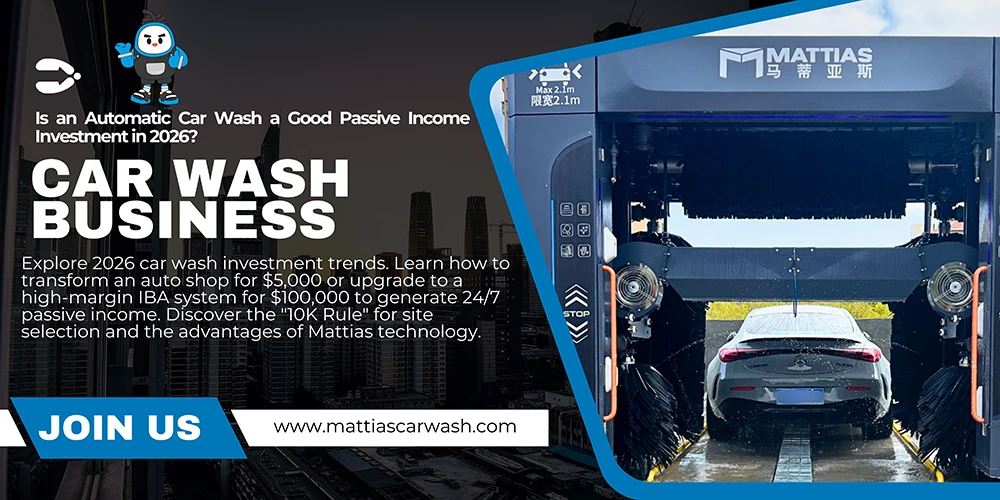

Within the economic landscape of 2026, the fully automated car wash sector has emerged as a premium investment opportunity, offering resilience against market fluctuations and generating stable passive income. This article provides a comprehensive analysis of how to maximise your return on investment (ROI) through strategic site selection, technological upgrades, and business model optimisation.
Key Takeaways for 2026 Car Wash Investors
Passive Income Generation: Modern automated systems (like Mattias) operate 24/7 with minimal staffing, transforming active management into reliable, hands-off revenue.
Summer Profit Spikes: Peak season alignment captures the surge in road trips and outdoor activities, maximizing daily wash volume.
Retrofitting Efficiency: Converting existing auto shops or gas stations costs significantly less ($5,000–$10,000 per self-serve bay) by utilizing existing infrastructure and zoning.
IBA Upgrades: Investing approximately $100,000 in an In-Bay Automatic (IBA) car wash system transitions your business from manual labor to a fully automated, high-margin cash flow engine.
Tech-Driven Safety: Advanced Eva closed-cell foam brushes and smart pneumatic contouring systems eliminate the risk of clear-coat damage, ensuring premium customer satisfaction.
Optimized Site Selection: Success hinges on traffic (>10,000 vehicles per day), corner lot accessibility, and robust infrastructure (3-phase power and heavy-duty water mains).
Leveraging exceptionally low variable costs and a highly automated operational model, investors can effortlessly scale their asset portfolios without increasing daily management time.
Why Choose the Car Wash Industry in 2026?
As we navigate the economic landscape of 2026, savvy investors are increasingly migrating toward asset classes that offer resilience against market volatility while requiring minimal daily oversight. The automated car wash industry stands out as a premier vehicle for exactly this type of financial growth.
1. Consistent, Automated Passive Income
The modern car wash investment is no longer synonymous with high labor costs and constant management headaches. Today’s facilities, particularly those utilizing advanced automated setups like the Mattias automated car wash systems, are designed specifically for the absentee or semi-absentee owner. By leveraging a professional management team and sophisticated remote-monitoring software, owners can handle daily operations digitally. This structure provides investors with a robust, low-maintenance stream of passive income, allowing you to scale your portfolio without scaling your working hours.
2. The Summer Revenue Peak
Timing your market entry is crucial. Summer remains the undisputed peak season for the car wash industry. Whether it is families embarking on cross-country road trips, off-road enthusiasts returning from weekend adventures, or simply the increased prevalence of outdoor activities, the demand for vehicle cleaning services skyrockets. For instance, in car-centric markets like Los Angeles, California, the influx of summer beach traffic and coastal road trips creates a massive, predictable surge in daily wash volume. Positioning your investment to capture this seasonal swell ensures a rapid acceleration in your initial cash flow.
3. High Profit Potential & Low Variable Costs
Unlike traditional retail or food service, the car wash business model boasts incredibly low direct operating costs per transaction. Once the initial capital expenditure is complete, the cost of water, electricity, and chemical detergents per vehicle is fractional. Through strategic site selection and the inherent economies of scale provided by automation, investors can realize exceptional profit margins. As your customer volume increases, your overhead remains relatively static, driving the vast majority of gross revenue directly to your bottom line.
Two Core Investment Models for Maximum Returns
Entering the car wash market does not require a one-size-fits-all approach. Depending on your available capital, real estate access, and risk tolerance, you can choose between two distinct, highly profitable investment pathways.
1. The Retrofitting Strategy (Adaptive Reuse)
Building a car wash from the ground up involves significant permitting hurdles, concrete pouring, and utility trenching. Retrofitting—the process of converting an existing auto repair shop, abandoned gas station, or obsolete manual wash—can save investors hundreds of thousands of dollars in foundational construction costs.
Because these locations often already possess the necessary commercial zoning, drainage systems, and structural canopies, your primary expenditure shifts strictly to equipment. For a self-serve wash bay retrofitting project, the equipment investment drops drastically to merely $5,000 to $10,000 per bay. This highly economical entry point allows investors to acquire distressed real estate, upgrade the hardware, and rapidly turn a failing property into a cash-flowing asset with minimal downtime.
2. The In-Bay Automatic (IBA) Upgrade
For those looking to maximize ticket averages and appeal to the modern consumer who values speed and convenience, the In-Bay Automatic (IBA) Upgrade is the gold standard.
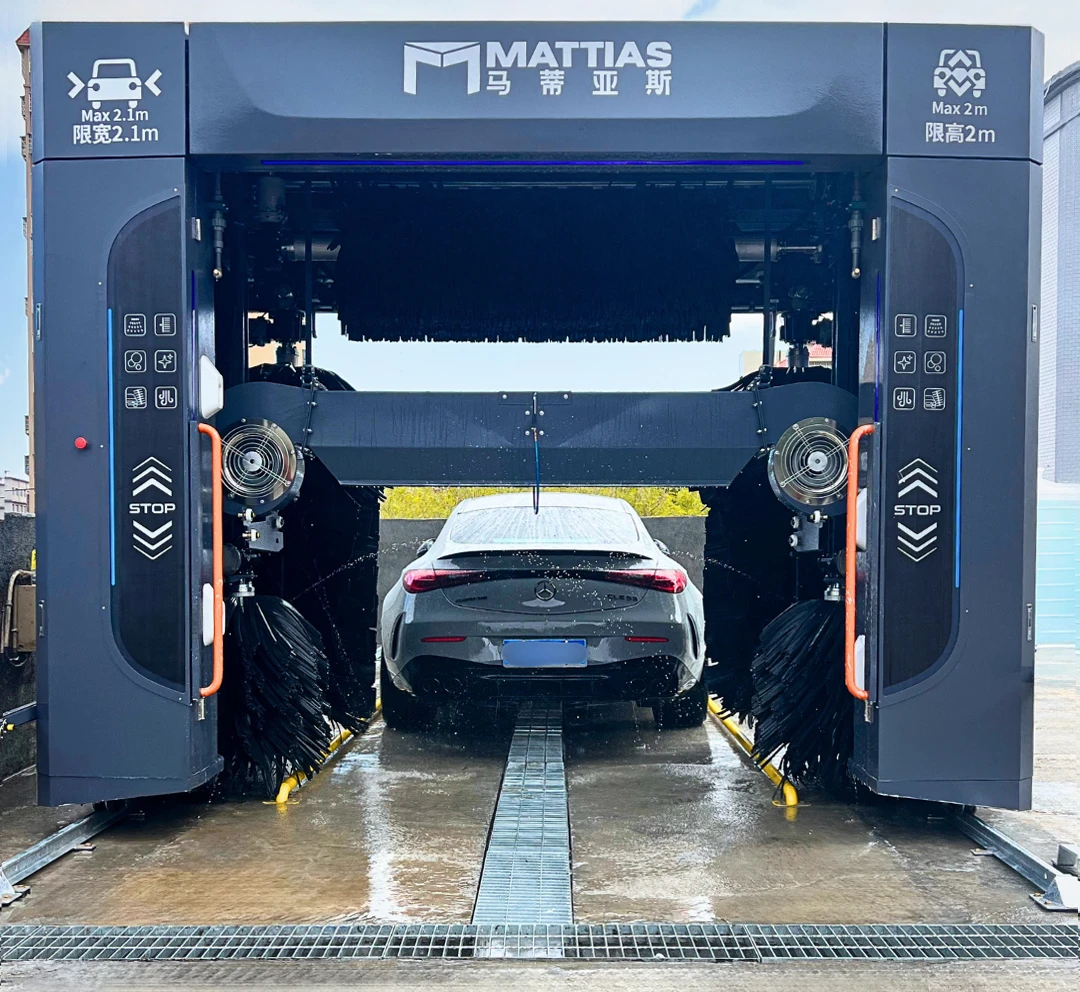
By investing approximately $100,000, you can introduce a single, state-of-the-art reciprocating automatic car wash machine into your facility. This transformation is profound. It pivots a location from a manual, labor-intensive operation into a 24/7, all-weather passive income generator. An IBA system operates flawlessly without human intervention, allowing your business to generate revenue at 2:00 AM just as easily as it does at 2:00 PM.
Financial Insight: To evaluate the viability of either model, investors often rely on a standard Return on Investment (ROI) calculation.

Because the IBA upgrade fundamentally lowers labor (Net Profit increases) while maintaining a predictable fixed Investment Cost, the ROI timeline is frequently shorter than traditional commercial real estate investments.
Summer Car Wash Site Selection Checklist
Even the most advanced technology cannot save a poorly located business. To ensure your investment captures the massive traffic of the summer peak season, rigorously evaluate potential sites against this 5-point checklist:
High Traffic Volume (The 10K Rule): Demand visibility and flow. Prioritize thoroughfares that boast an Average Daily Traffic (ADT) count of more than 10,000 vehicles. High commuter routes and major arterial roads are non-negotiable for sustained success.
Exceptional Visibility: Your building is your best billboard. The site should be unobstructed by dense foliage or larger buildings. Locations near high-draw summer destinations—such as public beaches, national parks, tourist attractions, or heavily trafficked coastal highways—naturally funnel potential customers past your entrance.
Seamless Accessibility: Drivers make split-second decisions to wash their cars. If getting into your lot is difficult, they will drive past. Prioritize corner lots at signaled intersections. Ensure the property has dedicated, wide lanes for distinct ingress (entrance) and egress (exit) to prevent bottlenecks and ensure smooth traffic flow, especially during busy weekend rushes.
Favorable Demographics: Position your facility near rapidly expanding suburban neighborhoods, dense residential complexes, and complementary retail hubs (like grocery stores or coffee shops). Areas with high vehicle ownership and rising median household incomes correlate directly with frequent car wash subscriptions.
Infrastructure Integrity: Automated car washes are heavy industrial operations. Ensure the prospective site has robust infrastructure, specifically a 3-phase electrical power supply to handle industrial blowers and pumps, and oversized commercial water mains. Furthermore, rigorously verify that the property complies with local commercial zoning laws and municipal wastewater regulations.

Technology-Driven Competitive Advantages
In 2026, consumer expectations are higher than ever. Vehicle owners are highly protective of their investments, and local municipalities are increasingly strict regarding environmental impacts. Leveraging state-of-the-art technology is how you separate your facility from legacy competitors.
1. Eva Eco-Friendly Brushes: The Scratch-Free Guarantee
Older car washes used abrasive nylon bristles or heavy cloth that absorbed water, trapped dirt, and frequently caused micro-scratches (swirl marks) on vehicle clear coats. Modern facilities utilize Eva closed-cell foam materials. This high-density, eco-friendly material is scientifically engineered to be non-porous. Because it does not absorb water or trap grit, it gently polishes the car’s surface rather than scratching it, delivering a superior, mirror-like clean that builds immense customer trust and loyalty.
2. Smart Control Systems & Vehicle Profiling
Today’s IBA systems are practically robotic. Utilizing advanced pneumatic controls and electrical contour tracking technology, the wash machinery automatically scans and identifies the exact dimensions of the vehicle entering the bay. Whether it is a low-profile sports car or a massive, lifted summer off-road SUV, the system dynamically adjusts the brush pressure and nozzle distance in real-time, ensuring a perfect, customized wash without the risk of equipment collisions or missed spots.
3. Robust Backend Support Systems
What happens behind the scenes dictates your profitability. It is imperative to mandate the installation of commercial-grade water softening systems. Hard water causes calcium scale buildup, which not only leaves spots on customer vehicles but also destroys expensive high-pressure nozzles and pumps, leading to costly downtime. Furthermore, integrating a water recycling and reclamation system allows you to reuse up to 80% of your wash water. This is an absolute necessity for compliance in drought-prone regions and serves as a massive cost-saving measure that dramatically reduces your monthly utility expenditures.
Regional Financial Advantages & Global Perspectives
A truly optimized car wash investment strategy looks at both micro-level technology and macro-level financial environments.
1. The Impact of Utility Rates
Your operating margins are heavily influenced by local utility costs. For international investors or those looking at global expansion, markets like Malaysia offer distinct advantages. In such regions, highly favorable, subsidized water and electricity tariffs can drastically slash monthly operating expenses. When you combine low utility rates with high-efficiency automated equipment, the payback period (the time it takes to recoup your initial investment) is significantly accelerated compared to regions with premium utility costs.
2. The Cashless Revolution & Recurring Revenue
We are living in a frictionless economy. Modernized payment terminals are no longer optional; they are the lifeblood of your revenue stream. By outfitting your wash bays with secure terminals that support Apple Pay, Google Wallet, and tap-to-pay credit cards, you eliminate the friction of exact change. This cashless revolution dramatically speeds up the queue, improves the throughput rate (cars washed per hour), and psychologically encourages customers to select higher-priced, premium wash packages—directly elevating your Average Revenue Per User (ARPU). Furthermore, integrating License Plate Recognition (LPR) or RFID technology allows you to offer monthly subscription wash clubs, turning unpredictable daily sales into guaranteed, recurring revenue.
FAQs: Answering Common Investor Queries
Is an automated car wash a good passive income investment in 2026?
Yes, automated car washes are considered highly lucrative passive income investments in 2026. By utilizing In-Bay Automatic (IBA) systems, automated payment kiosks, and remote monitoring software, owners can run the facility 24/7 with zero to minimal on-site staff. This significantly lowers labor costs and allows the business to generate consistent, hands-off revenue.
How much does it cost to upgrade to an In-Bay Automatic (IBA) car wash system?
On average, upgrading an existing facility with a single, state-of-the-art reciprocating In-Bay Automatic (IBA) machine requires a capital investment of approximately $100,000. This covers the cost of the automated machinery, smart contouring sensors, and installation, turning a manual bay into a continuous revenue generator.
What is the cheapest way to start a car wash business?
The most cost-effective method is the “retrofitting” model. By purchasing an existing, closed gas station, auto repair shop, or outdated manual wash, you save heavily on construction and zoning permits. Equipping a retrofitted self-serve wash bay typically costs between $5,000 and $10,000 in equipment per bay.
Do automated car washes damage or scratch car paint?
Modern automated car washes utilizing Eva closed-cell foam brushes do not damage car paint. Unlike outdated cloth or nylon bristles that trap dirt and grit, Eva foam is non-porous. It repels dirt and gently glides over the vehicle’s clear coat, providing a safe, scratch-free, and high-quality clean.
What makes a good location for a car wash?
A highly profitable car wash location requires an Average Daily Traffic (ADT) volume of over 10,000 vehicles. It should be situated on a highly visible corner lot with easy, unobstructed ingress and egress. Ideal locations are near fast-growing residential demographics, daily-chore retail centers, or major summer tourist routes like beaches and parks.
Ready to Accelerate Your Investment Journey?
The automated car wash sector in 2026 presents a rare combination of high-profit margins, technological efficiency, and reliable passive income. Whether you are looking to retrofit a local auto shop here in Los Angeles or deploy a fleet of IBA systems in emerging markets, strategic planning is the key to unlocking maximum ROI.