










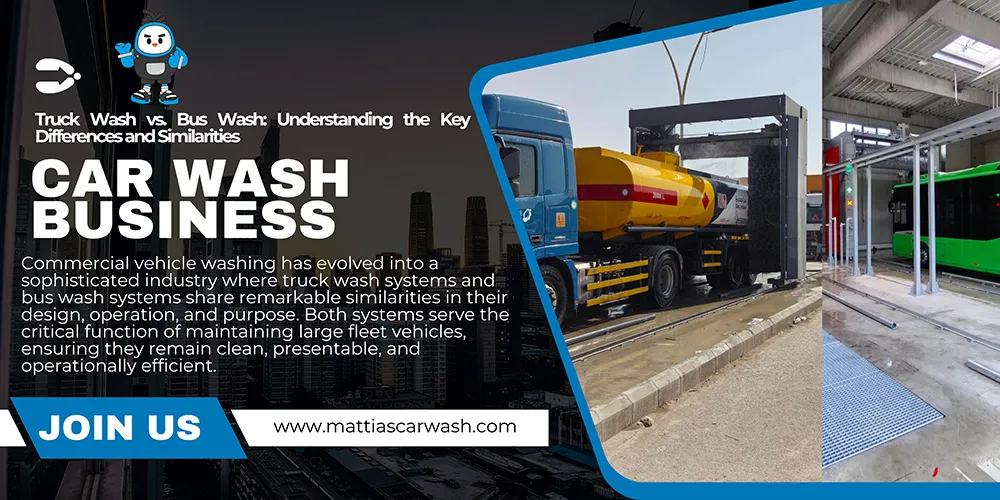

Fleet operators managing commercial vehicles often face the critical decision of selecting appropriate washing systems for their operations. While both bus and truck washes serve the fundamental purpose of maintaining vehicle cleanliness, their distinct approaches, design philosophies, and operational parameters create significant differences that directly impact performance, cost-effectiveness, and fleet efficiency. Understanding these primary differences enables businesses to make strategic investments that align with their specific operational requirements and vehicle characteristics.
This analysis examines the core distinctions between bus and truck wash systems, exploring how each category addresses unique challenges while serving different sectors of the commercial vehicle industry.

The Similarities Between Truck and Bus Wash Systems
Commercial vehicle washing has evolved into a sophisticated industry where truck and bus wash systems share remarkable similarities in their design, operation, and purpose. Both systems serve the critical function of maintaining large fleet vehicles, ensuring they remain clean, presentable, and operationally efficient. Understanding these similarities helps fleet managers make informed decisions about their washing infrastructure and maintenance programs.
The world of commercial vehicle cleaning encompasses various automated and semi-automated systems designed specifically for heavy-duty vehicles. Whether we’re talking about long-haul trucks or city transit buses, the fundamental challenges remain consistent: removing road grime, salt, dirt, and debris from large surfaces while maintaining efficiency and cost-effectiveness.
Shared Infrastructure Requirements
Both truck and bus wash systems require substantial infrastructure investments that are surprisingly similar. The physical footprint needed for these operations often overlaps significantly, with both requiring large bays capable of accommodating vehicles ranging from 35 to 60 feet in length. The height clearances typically need to accommodate vehicles up to 13.6 feet tall, making the structural requirements nearly identical.
Water supply systems represent another area of convergence. Both types of facilities require high-pressure water delivery systems capable of generating between 1,000 to 3,000 PSI, depending on the specific cleaning requirements. The water volume requirements are substantial for both applications, often necessitating storage tanks of 5,000 to 10,000 gallons to ensure continuous operation during peak periods.
Electrical infrastructure demands are equally comparable, with both systems requiring three-phase electrical service to power high-capacity pumps, conveyor systems, and various automated components. The typical power requirements range from 200 to 400 amperes, depending on the complexity and size of the installation.
Drainage and Water Reclamation Systems
Environmental considerations have made water reclamation systems a standard feature in both truck and bus washing facilities. These systems typically include settling tanks, oil separators, and filtration equipment that processes and reuses up to 85% of the water used in the washing process. The similarity in wastewater composition from both vehicle types makes it practical to use identical reclamation technologies.
The drainage requirements are remarkably similar, with both systems needing substantial floor drains capable of handling large volumes of water mixed with various contaminants. The slope requirements for proper drainage typically range from 1% to 2% toward collection points, regardless of whether the facility serves trucks or buses.
Equipment and Technology Parallels
The core washing equipment used in both truck and bus facilities shares numerous similarities. High-pressure spray systems form the backbone of both operations, utilizing similar nozzle configurations, pump systems, and control mechanisms. The spray patterns and pressures are often interchangeable between the two applications, with adjustments made primarily for vehicle-specific areas rather than fundamental differences in approach.
Brush systems, when employed, use similar materials and mechanisms. The rotating brush assemblies in both truck and bus washes typically feature soft-cloth or foam brushes designed to clean without scratching painted surfaces. The drive mechanisms, typically hydraulic or electric, are virtually identical between applications.
Chemical delivery systems represent another area of convergence. Both types of facilities use automated chemical injection systems that precisely meter detergents, degreasers, and rinse aids based on vehicle size and soil conditions. The storage tanks, pumping systems, and injection valves are often sourced from the same manufacturers and use identical technologies.
Automation and Control Systems
Modern truck and bus wash systems increasingly rely on sophisticated control systems that share remarkable similarities. Programmable logic controllers (PLCs) manage the washing sequences, monitor system performance, and provide diagnostic information. The programming logic for both applications follows similar patterns, with adjustments made for cycle timing and specific vehicle dimensions rather than fundamental operational differences.
Sensor technologies employed in both systems include photoelectric sensors for vehicle detection, pressure sensors for system monitoring, and proximity sensors for equipment positioning. The reliability requirements and environmental challenges faced by these sensors are identical regardless of the vehicle type being washed.
Operational Efficiency Considerations
Both truck and bus wash operations prioritize throughput efficiency as a critical success factor. The goal in both applications is to maximize the number of vehicles cleaned per hour while maintaining consistent quality standards. This shared objective has led to similar approaches in cycle timing, typically ranging from 3 to 8 minutes per vehicle depending on the service level selected.
Labor requirements show striking similarities between truck and bus operations. Both typically require minimal staffing levels during automated operations, with one to two operators managing the entire facility. The skill sets required for equipment operation, maintenance, and troubleshooting are largely transferable between truck and bus washing applications.
Quality control measures employed in both types of facilities focus on ensuring consistent coverage, applying chemicals appropriately, and thoroughly rinsing. The inspection protocols and quality metrics used are often identical, with both operations measuring customer satisfaction, equipment uptime, and resource utilization using similar methodologies.
Scheduling and Traffic Flow Management
Both truck and bus washing facilities face similar challenges in traffic flow management and scheduling optimization. The physical constraints of moving large vehicles through washing bays create identical logistical challenges, regardless of whether the vehicles are commercial trucks or transit buses. Queue management systems, appointment scheduling, and peak-hour capacity planning follow similar principles in both applications.
The approach to handling different vehicle sizes and configurations is remarkably similar. Both systems must accommodate varying vehicle lengths and heights, leading to similar solutions such as adjustable equipment positioning, multiple program selections, and flexible cycle timing.
Maintenance and Service Requirements
The maintenance requirements for truck and bus wash systems show significant overlap due to the shared equipment and operational stresses. Preventive maintenance programs for both applications typically include daily equipment inspections, weekly system performance checks, and monthly comprehensive maintenance cycles. The wear patterns on pumps, motors, and mechanical components are similar due to comparable operating conditions and duty cycles.
Spare parts inventory management follows similar principles for both truck and bus washing operations. The critical components that require stock maintenance include pump seals, nozzles, hoses, electrical contactors, and various sensors. The failure modes and replacement frequencies are often identical between the two applications.
Technical service requirements are remarkably similar, with both systems requiring access to specialized technicians familiar with high-pressure systems, automated controls, and chemical handling equipment. The service intervals and maintenance procedures are often interchangeable between truck and bus washing facilities.
Safety and Compliance Standards
Both truck and bus wash operations must comply with similar safety regulations and industry standards. Occupational Safety and Health Administration (OSHA) requirements for equipment guarding, electrical safety, and chemical handling are identical regardless of the vehicle type being serviced. The safety training requirements for operators are largely the same, covering high-pressure equipment operation, chemical safety, and emergency procedures.
Environmental compliance requirements show significant overlap, with both operations subject to similar water discharge regulations, air quality standards, and waste management requirements. The monitoring and reporting obligations are often identical, regardless of whether the facility serves trucks or buses.
Chemical and Cleaning Product Applications
The cleaning chemistry used in both truck and bus washing operations shows remarkable similarity. Alkaline detergents form the foundation of both cleaning programs, with formulations designed to remove road grime, diesel soot, and various organic contaminants. The pH levels, concentration ratios, and application methods are often identical between the two applications.
Specialized cleaning products for specific contamination types are shared between truck and bus operations. Degreasing agents for engine compartments, wheel cleaners for removing brake dust and road salt, and brightening agents for aluminum surfaces are used in both applications with minimal formulation differences.
The trend toward environmentally friendly cleaning products has affected both truck and bus washing operations similarly. Biodegradable detergents, phosphate-free formulations, and concentrated products that reduce packaging waste are increasingly common in both applications.
Application Methods and Dosing Systems
The methods used to apply cleaning chemicals show significant similarities between truck and bus operations. Automated dosing systems that inject precise amounts of chemicals based on vehicle size and soil conditions are standard in both applications. The calibration procedures, monitoring requirements, and adjustment protocols are largely identical.
Foam application systems, where used, employ similar technologies and methodologies. The foam generation equipment, application patterns, and dwell time management are comparable between truck and bus washing operations, with adjustments made primarily for vehicle-specific geometry rather than fundamental differences in approach.
Economic and Business Model Similarities
The business models supporting truck and bus wash operations share numerous characteristics. Both typically operate on volume-based pricing, with economies of scale playing a crucial role in profitability. The fixed costs associated with equipment, facilities, and utilities create similar financial pressures regardless of the vehicle type being served.
Customer relationship management approaches are remarkably similar, with both operations focusing on fleet account development and long-term service contracts. The sales cycles, contract negotiation processes, and customer retention strategies are often interchangeable between truck and bus washing businesses.
The seasonal variations in demand affect both truck and bus operations similarly, with winter months typically showing increased demand due to road salt and adverse weather conditions. The capacity planning and staffing adjustments required to handle these fluctuations follow similar patterns in both applications.
Cost Structure and Pricing Models
The cost structures of truck and bus washing operations show significant overlap. Variable costs, including water, chemicals, electricity, and labor,r represent similar percentages of total operating expenses in both applications. The pricing models often use comparable metrics such as per-wash fees, monthly unlimited plans, or volume-based discounts.
Capital investment requirements are remarkably similar, with both operations requiring substantial initial investments in equipment, facilities, and working capital. The return on investment calculations and payback period analyses use similar methodologies and assumptions regardless of the target vehicle type.
Technology Integration and Future Trends
Both truck and bus wash industries are experiencing similar technological evolution. Internet of Things (IoT) integration is becoming standard in both applications, with sensors and monitoring systems providing real-time data on equipment performance, resource consumption, and operational efficiency. The technology platforms and software solutions are often identical between the two applications.
Mobile application development for customer interaction and service management follows similar patterns in both truck and bus washing operations. Digital payment systems, appointment scheduling applications, and service history tracking are being implemented using comparable technologies and user interfaces.
The integration of artificial intelligence and machine learning technologies is emerging in both applications, with systems capable of optimizing wash cycles based on vehicle condition, weather patterns, and historical data. The algorithms and implementation approaches are often transferable between truck and bus washing operations.
Sustainability and Environmental Innovation
Both industries are pursuing similar sustainability initiatives driven by environmental regulations and customer expectations. Water conservation technologies, energy-efficient equipment, and waste reduction programs are being implemented using comparable approaches and technologies in both truck and bus washing operations.
The adoption of renewable energy sources such as solar panels and wind power is occurring at similar rates in both applications. The energy consumption patterns and conservation opportunities are often identical, making sustainability solutions highly transferable between truck and bus washing facilities.
Customer Service and Quality Assurance
Customer service approaches in both truck and bus washing operations focus on similar priorities: consistency, reliability, and convenience. The service level agreements, quality metrics, and customer satisfaction measurement tools are often identical between the two applications. Both operations must balance speed with thoroughness to meet customer expectations.
Quality assurance programs employ similar methodologies, with both operations using standardized inspection procedures, customer feedback systems, and continuous improvement processes. The training programs for quality control personnel are largely interchangeable between truck and bus washing facilities.
The handling of customer complaints and service recovery procedures follows similar protocols in both applications. Documentation requirements, escalation procedures, and resolution tracking systems are often identical regardless of the vehicle type being serviced.
Performance Metrics and Monitoring
Both truck and bus washing operations rely on similar key performance indicators (KPIs) to measure success. Throughput rates, customer satisfaction scores, equipment uptime, and resource utilization are monitored using comparable methodologies and reporting systems. The benchmarking data and industry standards are often shared between the two applications.
The use of data analytics to optimize operations is becoming standard in both truck and bus washing facilities. The analysis of wash cycle times, chemical consumption, and equipment performance uses similar tools and techniques regardless of the target vehicle type.
Regulatory Compliance and Industry Standards
Both truck and bus wash operations must comply with similar regulatory frameworks covering environmental protection, worker safety, and operational standards. The permitting requirements, inspection procedures, and compliance reporting obligations are often identical regardless of the vehicle type being serviced.
Industry certifications and standards apply equally to both applications. Professional associations such as the International Carwash Association provide guidance and certification programs that are applicable to both truck and bus washing operations. The training requirements and best practices are largely transferable between the two applications.
The insurance requirements and risk management approaches are remarkably similar, with both operations facing comparable liability exposures and requiring similar coverage types. Safety protocols and risk mitigation strategies are often identical between truck and bus washing facilities.
Professional Development and Training
The training and professional development requirements for personnel in both truck and bus washing operations show significant overlap. Technical training programs covering equipment operation, maintenance procedures, and safety protocols are often interchangeable between the two applications. The skill sets required for success are largely transferable.
Continuing education requirements and industry certification programs serve both truck and bus washing professionals equally. The knowledge base required for equipment troubleshooting, customer service, and operational management is remarkably similar regardless of the vehicle type being serviced.
Supply Chain and Vendor Relationships
Both truck and bus washing operations rely on similar supplier networks and vendor relationships. Equipment manufacturers, chemical suppliers, and service providers often serve both markets using identical products and services. The procurement processes, vendor selection criteria, and relationship management approaches are largely interchangeable.
The spare parts supply chain shows significant overlap, with many components being identical between truck and bus washing systems. Inventory management systems, supplier negotiations, and logistics coordination follow similar patterns in both applications. The economies of scale achieved through shared supplier relationships benefit both truck and bus washing operations.
Service provider relationships, including maintenance contractors, chemical suppliers, and equipment manufacturers, are often shared between truck and bus washing facilities. The contract terms, service level agreements, and performance metrics are typically identical regardless of the primary vehicle type being serviced.
Key Differences Between Truck and Bus Washes
While truck and bus wash systems share many similarities, the distinct characteristics of these commercial vehicle types create specific requirements that drive significant differences in design, operation, and functionality. Understanding these key differences is crucial for fleet managers, facility designers, and operators who want to optimize their washing operations for specific vehicle types. The variations extend beyond simple dimensional considerations to encompass operational patterns, contamination types, customer expectations, and regulatory requirements.
The commercial vehicle washing industry has evolved to recognize that one size does not fit all when it comes to cleaning trucks versus buses. Each vehicle type presents unique challenges that require tailored solutions, specialized equipment configurations, and different operational approaches. These differences influence everything from initial facility design to daily operational procedures and long-term maintenance strategies.
Vehicle Design and Configuration Differences
The fundamental design differences between trucks and buses create distinct washing challenges that require specialized approaches. Truck configurations vary dramatically, from single-unit delivery trucks to complex tractor-trailer combinations with multiple trailers, creating a wide range of length variations from 20 feet to over 80 feet. This variability requires wash systems with exceptional flexibility in accommodation and cycle timing.
Buses, in contrast, typically fall into more standardized configurations. Transit buses generally measure between 35 to 60 feet in length with consistent height profiles around 10.5 to 11 feet. Motor coaches may extend to 45 feet but maintain relatively uniform dimensions. This standardization allows bus wash systems to be optimized for specific dimensional ranges rather than requiring extreme flexibility.
The aerodynamic profiles of these vehicles create different cleaning challenges. Trucks often feature complex angular surfaces, external fuel tanks, auxiliary equipment, and exposed mechanical components that create numerous areas where contaminants can accumulate. Buses typically present smoother, more uniform surfaces with fewer external protrusions, making them generally easier to clean thoroughly.
Access Points and Cleaning Zones
Truck washing requires attention to specialized zones that are unique to commercial hauling vehicles. The fifth wheel area of tractor units requires intensive degreasing and cleaning attention due to grease and debris accumulation. Trailer underbodies, wheel wells, and landing gear present cleaning challenges that don’t exist in bus washing applications.
Bus washing focuses more on passenger-related areas including extensive window surfaces, door mechanisms, and wheelchair accessibility equipment. The emphasis on maintaining a clean, welcoming appearance for public transportation creates different priority areas compared to the functional cleaning requirements of freight vehicles.
Contamination Types and Cleaning Requirements
The types of contaminants encountered by trucks versus buses differ significantly, driving distinct cleaning chemistry and technique requirements. Truck contamination typically includes heavy diesel soot, road tar, industrial residues, agricultural products, and various cargo-related substances. Long-haul trucks accumulate substantial insect residue and road film from extended highway operation.
Bus contamination tends to be more urban-focused, consisting primarily of city dust, brake dust, exhaust residue, and general atmospheric pollution. The contamination is typically lighter but more consistent, as buses operate on regular routes with predictable exposure patterns. The focus on appearance maintenance for public-facing vehicles creates higher standards for visual cleanliness.
The cleaning chemistry requirements reflect these contamination differences. Truck washing often requires aggressive degreasing agents and specialized solvents for removing industrial contaminants, while bus washing emphasizes gentle but effective cleaners that maintain the appearance of painted surfaces and graphics without damage.
Specialized Cleaning Challenges
Truck washing must address cargo-specific contamination that varies by industry. Food-grade tankers require sanitization protocols, chemical haulers need specialized decontamination procedures, and construction vehicles accumulate concrete, asphalt, and other building materials. These varied requirements often necessitate different wash programs within the same facility.
Bus washing faces unique challenges related to public health and safety. Interior cleaning requirements, air filtration system maintenance, and the need to address biohazard situations create operational complexities that don’t exist in truck washing. The emphasis on odor control and sanitization reflects the passenger-carrying mission of these vehicles.
Operational Schedule and Usage Patterns
The operational patterns of trucks versus buses create fundamentally different washing requirements and scheduling challenges. Truck washing typically operates on irregular schedules dictated by delivery routes, maintenance schedules, and driver availability. The unpredictable nature of trucking operations requires wash facilities to accommodate vehicles at various hours and on short notice.
Bus operations follow highly predictable schedules with regular service intervals and defined maintenance windows. Transit agencies typically wash their fleets during specific overnight hours or on scheduled maintenance days, creating concentrated demand periods followed by periods of minimal activity. This predictability allows for more efficient facility utilization and staffing optimization.
The frequency requirements also differ significantly. Trucks may go weeks between washes depending on their routes and cargo types, while buses often require daily or every-other-day cleaning to maintain public appearance standards. This difference in frequency affects equipment sizing, capacity planning, and operational cost structures.
Peak Demand Management
Truck wash facilities must manage unpredictable demand surges related to weather events, seasonal shipping patterns, and regional economic activities. The ability to handle sudden increases in volume while maintaining service quality requires flexible staffing and equipment capacity that can be scaled up or down as needed.
Bus wash operations deal with predictable but intensive demand periods when entire fleets need cleaning within compressed time windows. This creates challenges in equipment throughput and may require multiple wash bays or extended operating hours to accommodate fleet requirements without disrupting service schedules.
Equipment Configuration and Specialization
The equipment used in truck versus bus washing differs in several key areas to address the specific requirements of each vehicle type. Truck wash equipment typically features higher pressure capabilities to remove stubborn industrial contaminants, with systems capable of generating 2,000 to 4,000 PSI compared to the 1,000 to 2,000 PSI common in bus washing applications.
Bus wash systems emphasize gentle but thorough cleaning with lower pressures and softer brush materials to protect painted surfaces and graphics. The equipment configuration often includes specialized window cleaning systems and gentle drying methods that won’t damage sensitive exterior components like mirrors and lighting systems.
The automation levels differ based on operational requirements. Truck washes often feature manual or semi-automated systems that allow operators to address specific contamination areas and vehicle configurations. Bus washes typically employ higher levels of automation to ensure consistent cleaning results across standardized vehicle fleets.
Specialized Equipment Features
Truck washing equipment often includes undercarriage washing systems designed to clean complex drivetrain components, suspension systems, and trailer understructures. These systems require specialized nozzle arrangements and high-pressure capabilities to reach and clean areas that accumulate significant contamination during highway operation.
Bus washing systems may include specialized interior cleaning capabilities such as air handling system cleaning, floor washing systems, and seat cleaning equipment. The focus on passenger comfort and health creates requirements for equipment that can address both exterior and interior cleaning needs efficiently.
Chemical Programs and Environmental Considerations
The chemical programs used in truck versus bus washing reflect the different contamination types and cleaning requirements of each vehicle type. Truck washing chemicals tend to be more aggressive, with higher pH detergents and specialized solvents designed to break down industrial contaminants, road tar, and heavy grease accumulations.
Bus washing programs emphasize gentle but effective cleaning with biodegradable detergents that won’t damage painted surfaces or graphics. The chemicals are formulated to provide excellent cleaning performance while being environmentally friendly, reflecting the public sector’s emphasis on sustainability.
The environmental impact considerations differ significantly between applications. Truck washing must address industrial waste streams that may contain hazardous materials from cargo contamination, requiring specialized treatment and disposal procedures. Bus washing typically generates more predictable wastewater that can be effectively treated using standard water reclamation systems.
Regulatory Compliance Requirements
Truck washing facilities often operate under more stringent environmental regulations due to the potential for hazardous material contamination from various cargo types. The wastewater treatment requirements may include specialized systems for removing petroleum products, chemicals, and other industrial contaminants.
Bus washing operations typically face different regulatory focuses related to public health and safety rather than industrial contamination. The emphasis is often on maintaining sanitary conditions and ensuring that cleaning processes don’t create health hazards for passengers or operators.
Customer Expectations and Service Standards
The customer expectations for truck versus bus washing services differ significantly, reflecting the distinct purposes and public visibility of these vehicle types. Truck washing customers typically prioritize functional cleanliness that maintains vehicle value and meets regulatory requirements. The focus is often on cost-effectiveness and convenience rather than aesthetic perfection.
Bus washing customers, particularly public transit agencies, emphasize appearance standards that reflect positively on the organization and create a welcoming environment for passengers. The cleaning standards are typically higher and more consistent, with less tolerance for variations in quality or missed areas.
The service level expectations also differ. Truck operators may accept longer wash cycles if they achieve better cleaning results or lower costs, while bus operators typically require predictable timing to maintain service schedules and minimize vehicle downtime.
Quality Metrics and Measurement
Truck washing quality metrics often focus on functional outcomes such as contamination removal, compliance with regulations, and customer satisfaction measured through repeat business and referrals. The assessment tends to be less formal and more relationship-based.
Bus washing quality is typically measured through formal inspection programs with standardized checklists, photographic documentation, and regular audits. The public nature of bus operations creates accountability requirements that don’t exist in most truck washing applications.
Technology Integration and Innovation
The technology adoption patterns in truck versus bus washing reflect different operational priorities and investment capabilities. Truck washing technology often focuses on operational efficiency, cost reduction, and flexibility to handle varied vehicle configurations. The emphasis is on robust, reliable equipment that can handle diverse cleaning challenges.
Bus washing technology typically emphasizes consistency, documentation, and integration with fleet management systems. The technology solutions often include detailed reporting capabilities, quality tracking systems, and integration with maintenance scheduling software used by transit agencies.
The innovation drivers differ between applications. Truck washing innovation is often market-driven by competitive pressures and cost reduction opportunities, while bus washing innovation is frequently driven by regulatory requirements, public accountability, and the need to demonstrate effective use of public resources.
Data Management and Reporting
Truck washing operations typically maintain basic transactional records focused on billing, customer preferences, and equipment utilization. The data requirements are generally straightforward and focused on operational efficiency rather than detailed compliance reporting.
Bus washing operations often require comprehensive documentation including detailed service records, quality assessments, chemical usage tracking, and environmental compliance reporting. The public sector nature of many bus operations creates audit requirements that necessitate extensive record-keeping capabilities.
Economic Models and Cost Structures
The economic models supporting truck versus bus washing operations differ significantly in structure and financial drivers. Truck washing economics are typically based on variable pricing that reflects service complexity, vehicle size, and contamination levels. The revenue model often includes premium services for specialized cleaning requirements.
Bus washing operations usually operate under contract-based models with fixed pricing structures that provide predictable revenue streams. The emphasis is on cost control and service consistency rather than maximizing revenue per wash through premium services.
The cost structure differences reflect operational variations. Truck washing often has higher variable costs due to unpredictable contamination levels and service requirements, while bus washing typically has more predictable cost structures that allow for better financial planning and resource allocation.
Investment and ROI Considerations
Truck washing facility investments often require higher flexibility premiums to accommodate varied vehicle types and service requirements. The equipment must be capable of handling diverse cleaning challenges, which may increase initial capital costs but provides broader market opportunities.
Bus washing facility investments can be more specialized and optimized for specific vehicle types and service requirements. This specialization may allow for lower capital costs and higher operational efficiency, but with less flexibility to serve diverse markets.
Staffing and Training Requirements
The staffing requirements for truck versus bus washing operations reflect different skill sets and operational demands. Truck washing staff must be capable of handling diverse vehicle configurations, varied contamination types, and unpredictable service requirements. The training emphasis is on adaptability and problem-solving skills.
Bus washing operations typically require more standardized skill sets focused on consistent application of established procedures. The training programs often emphasize quality consistency, documentation requirements, and compliance with established protocols rather than adaptability to varied situations.
The career development paths also differ. Truck washing offers opportunities for entrepreneurial growth and business development, while bus washing typically provides more structured career advancement within larger organizational frameworks such as transit agencies or contract service providers.
Safety and Training Protocols
Truck washing safety training must address diverse hazard exposures related to various cargo types, industrial contamination, and equipment configurations. The training programs must be comprehensive and adaptable to handle unpredictable situations and contamination types.
Bus washing safety protocols are typically more standardized but may include specialized training related to public health considerations, biohazard handling, and the unique safety requirements of working around passenger vehicles and related equipment.
Future Trends and Development Directions
The future development directions for truck versus bus washing reflect different market drivers and technological opportunities. Truck washing evolution is likely to focus on automation technologies that can handle diverse vehicle configurations, improved contamination detection systems, and enhanced efficiency measures that reduce operational costs.
Bus washing development is likely to emphasize integration capabilities with smart city infrastructure, enhanced environmental sustainability measures, and improved documentation and reporting systems that support public accountability requirements.
The sustainability trends affect both applications differently. Truck washing must address diverse environmental challenges related to varied contamination types, while bus washing focuses on consistent application of sustainable practices across standardized operations.
Technology Convergence and Divergence
While some technologies will continue to converge between truck and bus washing applications, the distinct operational requirements are likely to drive continued specialization in equipment design, chemical programs, and operational procedures. The challenge for the industry is balancing the economies of scale achieved through standardization with the performance benefits of specialization.
The integration of artificial intelligence and machine learning technologies is likely to follow different paths in truck versus bus washing applications, with truck systems focusing on adaptability and bus systems emphasizing consistency and optimization within defined parameters.
Choosing the Right Wash System for Your Fleet
When deciding between truck and bus wash systems, businesses must analyze their fleet composition and operational priorities. Here are some tips:
Assess Your Fleet’s Configuration:
If your fleet includes diverse vehicle types or long trailers, a truck wash system with flexible cleaning capabilities is essential. For uniform vehicle dimensions like standard transit or school buses, a specialized bus wash will suffice.
Consider Cleaning Requirements:
Determine whether your focus is on heavy-duty dirt removal, interior hygiene, or a mix of both. For example, refrigerated trucks may need advanced sanitation, whereas bus fleets emphasize maintaining spotless interiors for passengers.
Evaluate Workflow and Speed Needs:
If your fleet operates under tight schedules, opt for a wash system with rapid turnaround capabilities. Many bus washes are built for high-volume efficiency, while truck washes often require adaptable designs that can handle variable workloads.
Think Sustainability:
Both truck and bus operators can benefit from choosing wash systems designed with water-recycling technology or eco-friendly detergents to meet environmental goals while managing costs effectively.
Conclusion
The differences between truck and bus wash systems are substantial and meaningful, reflecting the distinct operational requirements, contamination challenges, and customer expectations associated with each vehicle type. While these systems may share common equipment and technologies, the application-specific requirements create significant variations in design, operation, and performance optimization.
Understanding these differences is crucial for anyone involved in the commercial vehicle washing industry. Facility designers must account for the specific requirements of their target market, operators must tailor their procedures and training programs accordingly, and equipment manufacturers must balance standardization with specialization to meet diverse market needs effectively.
The continued evolution of both truck and bus washing technologies will likely maintain these fundamental differences while introducing new capabilities and efficiencies. The key to success in either application is recognizing that optimal performance requires solutions specifically designed for the unique characteristics and requirements of the vehicles being served. The one-size-fits-all approach rarely delivers the best results in commercial vehicle washing, making it essential to understand and accommodate the specific needs of each application.
Fleet operators evaluating wash system options should prioritize vehicle configuration consistency, contamination intensity requirements, operational workflow demands, and long-term cost considerations. Organizations managing uniform vehicle fleets with predictable cleaning requirements typically benefit from specialized bus wash systems that optimize efficiency around standardized parameters. Operations managing diverse vehicle types with variable contamination challenges require truck wash systems that provide operational flexibility and intensive cleaning capabilities.
The decision between bus and truck wash systems ultimately depends on aligning system capabilities with specific operational requirements, ensuring that the selected solution optimizes cleanliness, efficiency, and cost-effectiveness for the particular fleet application.
Frequently Asked Questions
What is the main difference in wash cycle times between truck and bus systems?
Truck wash cycles typically vary more widely, ranging from 5-15 minutes depending on vehicle configuration and contamination levels. Bus wash cycles are more standardized, usually 6-10 minutes, due to consistent vehicle dimensions and contamination patterns. Truck systems need flexibility for different vehicle types, while bus systems prioritize consistent timing for schedule management.
How do the water pressure requirements differ between truck and bus washing?
Truck washing systems typically operate at higher pressures (2,000-4,000 PSI) to remove stubborn industrial contaminants and road grime. Bus washing systems use moderate pressures (1,000-2,000 PSI) to effectively clean while protecting painted surfaces and graphics. The pressure differences reflect the distinct contamination types each vehicle encounters.
Are there different environmental regulations for truck versus bus wash facilities?
Yes, truck wash facilities often face stricter wastewater treatment requirements due to potential hazardous material contamination from various cargo types. Bus wash facilities typically deal with more predictable wastewater composition but may have specific requirements related to public health and environmental sustainability, especially for publicly-owned transit systems.
What specialized equipment features distinguish truck from bus wash systems?
Truck wash systems often include heavy-duty undercarriage cleaning for complex drivetrain components and specialized degreasing stations for fifth wheels and mechanical areas. Bus wash systems typically feature gentle window cleaning systems, specialized drying equipment for painted surfaces, and sometimes interior cleaning capabilities for passenger areas.
How do the business models differ between truck and bus washing operations?
Truck washing typically operates on variable pricing models with pay-per-wash or volume-based pricing, serving diverse customers with irregular schedules. Bus washing usually involves contract-based models with fixed pricing serving transit agencies or large fleets, providing predictable revenue but requiring consistent service delivery and detailed documentation.