










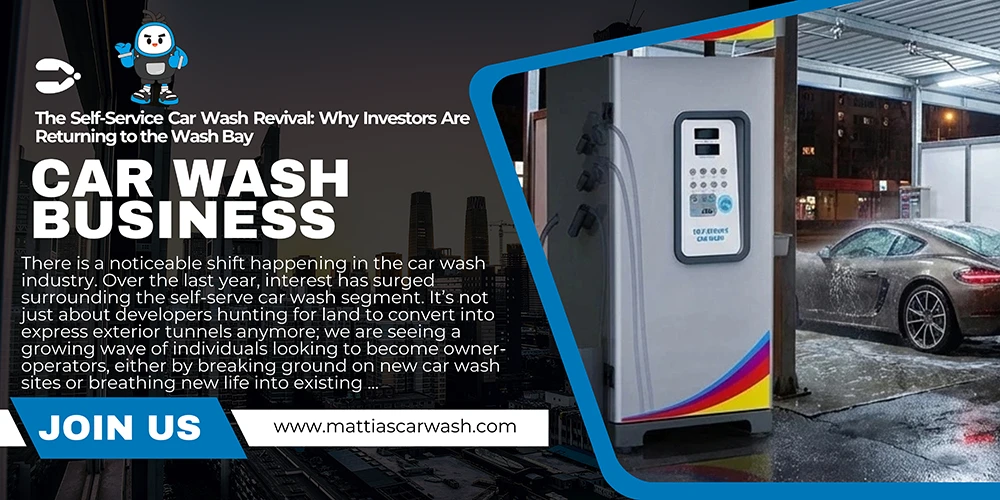

There is a noticeable shift happening in the car wash industry. Over the last year, interest has surged surrounding the self-serve car wash segment. It’s not just about developers hunting for land to convert into express exterior tunnels anymore; we are seeing a growing wave of individuals looking to become owner-operators, either by breaking ground on new car wash sites or breathing new life into existing ones through renovation.
Why the sudden comeback? Part of it is likely timing—lower commercial interest rates and better liquidity have made more deals possible. But the biggest driver is undeniably profitability.
Crunching the Numbers: Then vs. Now
If you look back at the industry benchmarks from 2013, a standard setup—typically a self-service car wash station with five spray bays and one in-bay automatic unit—was generating a gross income of around $220,000. Fast forward to today, and that same facility is pulling in slightly more than $400,000.
However, the self-serve car wash cost of entry has changed just as drastically. In 2013, the “all-in” price for that 5+1 configuration was roughly $1 million, or about $358 per square foot of building. By 2025, construction costs are estimated at approximately $538 per square foot.
This means that if you are planning a substantial project—say, five car wash bays, two automatic in-bays, a vacuum island, and pet wash stations—you are looking at an investment well over $2.0 million.
Throughput and Equipment Strategy
Despite the higher initial price tag, the income potential for larger sites is significantly higher. The math comes down to throughput. A typical in-bay automatic wash can handle about 10 to 12 cars per hour. However, investing in high-speed self-service car wash equipment that processes 20 or more vehicles an hour makes the business much more attractive.
Faster equipment doesn’t just clear lines; it improves your capture rate—often doubling it from 0.4 percent to 0.8 percent. This additional capacity is crucial for handling peak times and supporting subscription members who wash their cars frequently.
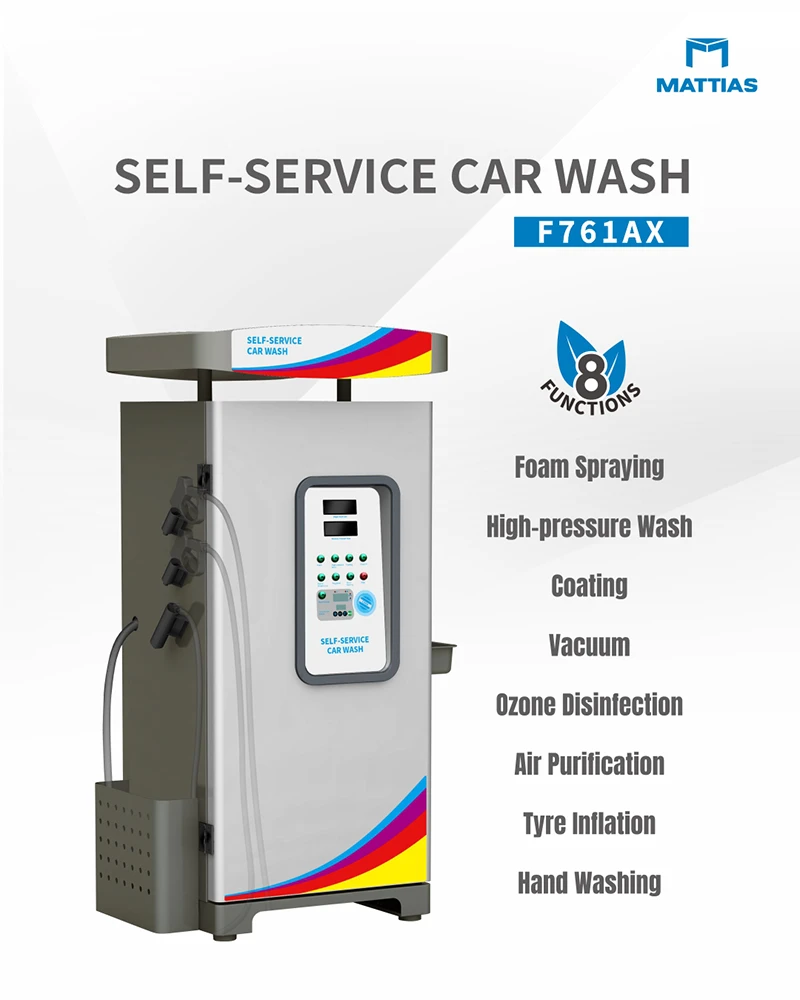
Reliability is the other half of the equation. Since the customer is doing the labor, the value chain is straightforward: the facility must work. Success depends on maintaining highly functional self-service car wash equipment with minimum downtime, 24/7, regardless of the weather. This is where partnering with a reliable manufacturer like Mattias Car Wash Machine becomes essential to ensure your bays are always running.
Bridging the Generational Gap
At the current level of investment, understanding your market demographics is critical. Many express exterior developers target a specific slice of the population: married homeowners, aged 25–65, earning over $50,000.
This strategy often leaves money on the table by ignoring Gen-Z, Millennials, and a large portion of Baby Boomers. A self-serve car wash bay often appeals to Gen-Xers who prefer doing it themselves, or younger drivers who don’t fit the “homeowner” profile.
Capturing this broad audience requires a mixed marketing approach. You cannot rely on one method. For instance, nearly 50 percent of Boomers still read the Sunday paper, and many seniors prefer cash and direct-mail coupons. Conversely, winning over the younger generation requires a digital-first strategy: touch-screen POS systems, tap-to-pay, mobile apps, and a strong social media presence.
The Bottom Line
The fundamental economics of the self-serve car wash haven’t changed much. The cost of goods generally trends at about 30 percent of gross sales.
For those willing to put in the work, the returns are compelling. An owner-operator managing the site themselves can achieve a gross net return of 50 percent or better. However, for larger, high-volume car wash sites, hiring a full-time manager is advisable to keep operations smooth, especially if you are managing a loyalty program.
Self-service offers built-in competitive advantages, but it requires an engaged operator to build a distinct brand. Whether you are building new or renovating, choosing the right partner for your machinery is the first step toward that 50 percent return.
Mattias is an industry consultant with more than 25 years of experience and is a former operator of car wash, oil change, and detail businesses. He can be reached at info@mattiascarwash.com.