











Keeping our vehicles sparkling clean in today’s fast-paced world can be quite the challenge. Whether we’re battling rush hour traffic, ferrying the kids to and from extracurricular activities, or embarking on weekend getaways, our cars face a daily onslaught of dirt and grime. While many of us would love nothing more than to lovingly hand wash our prized possessions, the reality is that time is a precious commodity. That’s where the convenience of automated car washing comes into play.
Day in and day out, countless drivers rely on cutting-edge car wash technologies to keep their vehicles in pristine condition. Gone are the days when a bucket, sponge, and a bit of elbow grease were the only options available. In this modern era, we’re spoiled for choice when it comes to automated car washing solutions. However, as with any technology, there are pros and cons to consider. Today, we’ll delve into the age-old debate: touch vs. touchless car washing systems.
Touch car washing: A hands-on approach
Touch car washing systems employ soft, soapy materials to clean vehicles. These systems use lightweight foam or plush cloth strips saturated with a specially formulated soap and water solution. As these materials glide across the vehicle’s surface, they work to loosen and lift away stubborn dirt and debris.
Pros:
- The physical contact provided by touch systems often results in a more thorough cleaning, especially for heavily soiled vehicles.
- Those hard-to-reach nooks and crannies that touchless systems might miss are more likely to get a good scrubbing.
- Touch systems are particularly effective at eliminating the hazy residue left behind by pollen and fine dust particles.
Cons:
- There’s a risk of damage to protruding parts like mirrors, antennas, or loose trim if the system isn’t properly calibrated.
- If a vehicle isn’t adequately pre-washed, dirt particles can potentially cause fine scratches on the paint surface.
- Regular maintenance of the washing materials is crucial to ensure optimal cleaning performance and prevent damage.
Touchless car washing: Hands off the merchandise
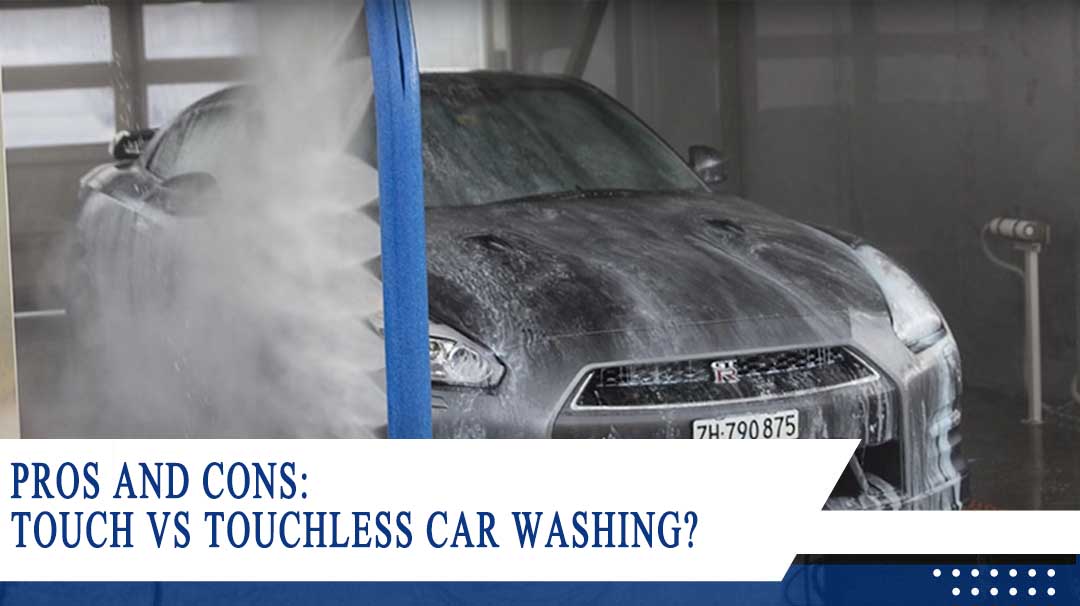
Touchless systems rely solely on high-pressure water jets and powerful cleaning agents to do the dirty work. Advanced sensors guide these jets to follow the contours of each vehicle, ensuring a comprehensive clean without any physical contact.
Pros:
- The lack of physical contact minimizes the risk of scratches or damage to the vehicle’s exterior.
- Cutting-edge sensor technology allows for precise targeting, reducing water waste and environmental impact.
- These systems are often perceived as gentler on a vehicle’s finish, particularly for cars with sensitive paint jobs.
Cons:
- Extremely stubborn dirt or organic matter may not be completely removed without the scrubbing action of a touch system.
- Some crevices and intricate areas might be missed by the high-pressure jets.
- To compensate for the lack of physical scrubbing, touchless systems may use stronger cleaning chemicals, which could potentially affect some paint finishes over time.
The choice is yours
As technology continues to advance, both touch and touchless car washing systems are constantly improving. The decision between the two often comes down to personal preference and the specific needs of your vehicle. Whichever method you choose, opting for a reputable car wash that utilizes top-of-the-line equipment is key to maintaining your vehicle’s appearance and protecting your automotive investment.
In the end, whether you prefer the thorough scrubbing of a touch system or the gentle caress of a touchless wash, the most important thing is that you’re taking steps to keep your ride looking its best. After all, in our hectic, on-the-go lives, a clean car can be a small oasis of order in an otherwise chaotic world.