

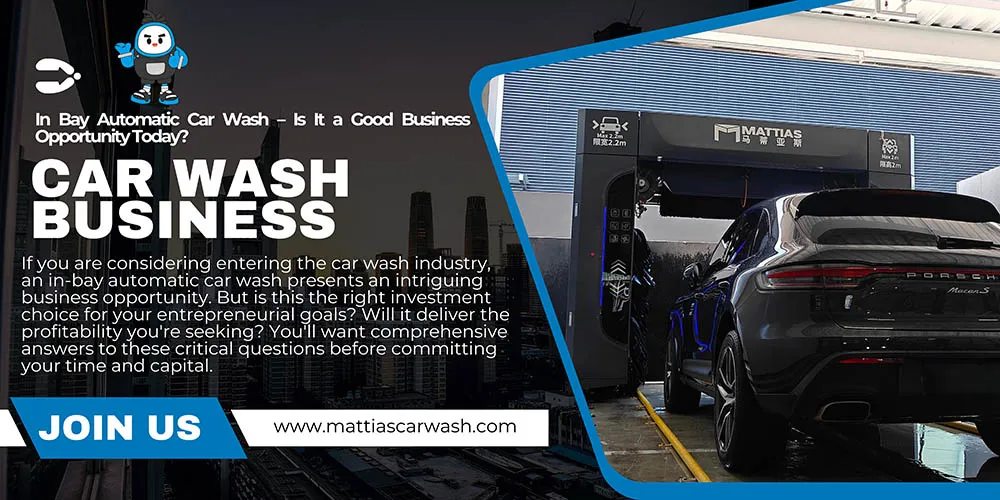

If you are considering entering the car wash industry, an in bay automatic car wash presents an intriguing business opportunity. But is this the right investment choice for your entrepreneurial goals? Will it deliver the profitability you’re seeking? You’ll want comprehensive answers to these critical questions before committing your time and capital. I’d like you to please look over the advantages and disadvantages to determine whether an in bay car wash aligns with your business objectives.

What Is an In Bay Car Wash?
An in bay car wash is a type of rollover car wash system where customers drive into a stationary bay and park their vehicle. Unlike a trolley car wash where the car moves through a tunnel, the washing equipment moves around the stationary vehicle. The automated system includes rotating brushes, high-pressure rinses, soap application, and drying equipment that operates around the parked car. This car wash business model offers both touchless and friction-based cleaning options, depending on the equipment configuration you choose for your automatic car wash operation.
Advantages of an In Bay Car Wash
Compact Footprint Maximizes Real Estate Efficiency
The in bay car wash requires significantly less land compared to tunnel systems, making it an attractive car wash investment for entrepreneurs with limited space or high real estate costs. A typical bay measures approximately 12 feet wide by 25 feet long, allowing you to potentially install multiple bays on a smaller lot. This efficiency can translate into lower property acquisition costs and reduced overhead expenses, improving your overall car wash franchise profitability.
Lower Initial Investment Than Tunnel Systems
Starting an in bay automatic car wash typically requires less capital than constructing a full tunnel operation. Equipment costs generally range from $150,000 to $400,000 per bay, depending on the sophistication of the system. This more modest investment threshold makes it accessible to a broader range of entrepreneurs exploring investment ideas in the car wash sector. The reduced complexity also means shorter construction timelines and faster revenue generation.
Flexibility in Service Offerings Appeals to Diverse Customers
In bay systems allow you to offer multiple wash packages at different price points, from basic rinses to premium services with wax and undercarriage cleaning. This flexibility helps attract a wider customer base, from budget-conscious consumers to those seeking comprehensive vehicle care. Customers appreciate the ability to select their preferred service level, which can drive repeat business and customer loyalty for your automatic car wash operation.

Disadvantages of an In Bay Car Wash
Limited Throughput Compared to Tunnel Operations
The sequential nature of in bay washing means you can only serve one vehicle per bay at a time. A typical cycle takes 8-12 minutes, significantly limiting your hourly capacity compared to tunnel systems that can process multiple vehicles simultaneously. This throughput limitation directly impacts your revenue potential, especially during peak demand periods. If you’re targeting high-volume locations, this constraint could prove problematic for maximizing profits.
Customer Experience Can Be Less Convenient
Unlike drive-through systems where customers remain in motion, in bay washes require drivers to navigate into the bay, position their vehicle correctly, and wait through the entire cycle. Some customers find this process less convenient than the continuous flow of tunnel car washes. Additionally, inexperienced users may struggle with proper positioning, leading to incomplete cleaning or customer dissatisfaction that could harm your car wash business reputation.
Weather Dependency Affects Year-Round Operations
In bay car washes are typically open-air operations, making them more susceptible to weather conditions than enclosed tunnel systems. Cold temperatures can freeze equipment and cleaning solutions, while extreme heat can affect chemical effectiveness. Seasonal fluctuations in demand can significantly impact your cash flow, particularly in regions with harsh winters where customers may avoid washing their vehicles for extended periods.
Higher Maintenance Requirements Per Vehicle Served
The stop-and-start nature of in bay operations places additional stress on mechanical components compared to continuous tunnel systems. Frequent cycling of brushes, pumps, and motors can lead to increased wear and higher maintenance costs per vehicle served. The complexity of the rollover equipment also requires specialized technical knowledge for repairs, potentially increasing your operational expenses and downtime.
Competition from Express Tunnel Operators
The car wash industry has seen significant growth in express tunnel operations that emphasize speed and convenience. These competitors can process vehicles in 3-5 minutes compared to your 8-12 minute cycle time, appealing to time-conscious customers. This competitive pressure may limit your market share and pricing flexibility, particularly in markets with multiple car wash options.

Conclusion
An in bay car wash business offers a viable entry point into the lucrative vehicle cleaning industry, particularly for entrepreneurs with space constraints or limited initial capital. The flexibility to serve diverse customer preferences and lower startup costs compared to tunnel systems make it an attractive investment option. However, throughput limitations and weather dependency present ongoing challenges that require careful consideration.
Success in this car wash business model depends heavily on strategic location selection, competitive pricing, and exceptional customer service. Market research and a comprehensive business plan are essential before committing to this investment. Consider partnering with established industry suppliers or exploring car wash franchise opportunities that provide ongoing support and proven operational systems.
For entrepreneurs seeking maximum flexibility and lower overhead costs, mobile car wash services through companies like Mattias Car Wash Solutions might offer superior profit potential without the constraints of fixed-location operations. These alternative business models deserve evaluation alongside traditional in bay systems as you explore the best car wash investment opportunity for your specific circumstances and market conditions.
