



Embarking on a new car wash venture or seeking to refine an existing one requires a robust strategic foundation. A SWOT (Strengths, Weaknesses, Opportunities, Threats) analysis stands as an indispensable tool in this endeavor, offering a comprehensive framework to assess both internal capabilities and external market dynamics. This analytical exercise moves beyond simple forecasting, empowering business owners to approach the future with informed and proactive strategies.
To yield a truly effective SWOT analysis, diligent data gathering is paramount. This involves thorough local market research to pinpoint specific customer preferences, emerging industry trends, and the intricacies of your competitive landscape. Consulting industry-specific reports can provide broad sector insights, but the most invaluable intelligence often stems from direct engagement. Connecting with existing car wash business owners and industry veterans offers practical, real-world perspectives that written reports might miss, ensuring your analysis is grounded in lived experience.
Unpacking the SWOT Components: Tailoring to Your Car Wash Model
Strengths (Internal Factors)
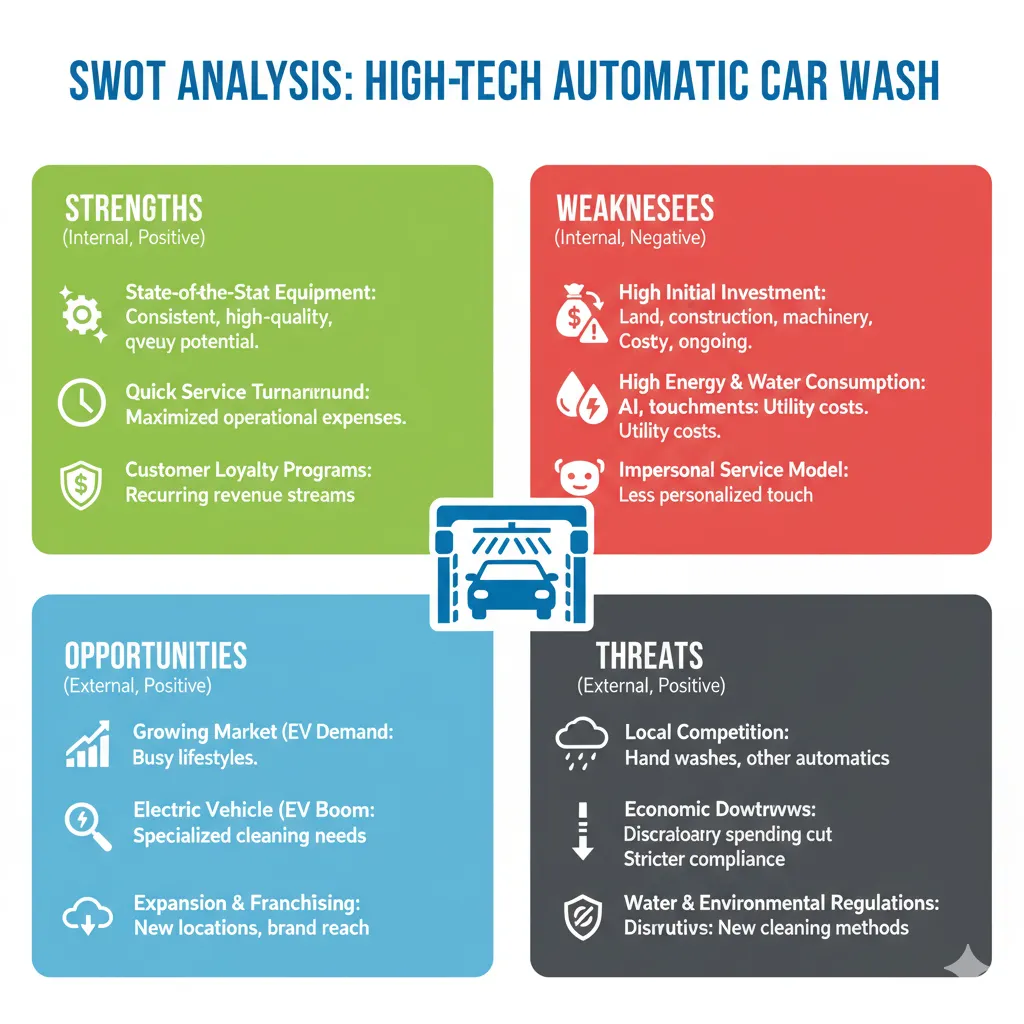
These are the inherent advantages unique to your car wash service that provide a competitive edge. For a High-Tech, Automatic Car Wash, strengths include rapid service, state-of-the-art equipment delivering consistent quality, and reduced manual labor requirements. A Full-Service Hand Car Wash distinguishes itself with meticulous attention to detail, a personalized customer experience, and the flexibility to cater to diverse vehicle needs. Meanwhile, a Mobile Car Wash and Detailing Service thrives on the unparalleled convenience it offers customers, personalized interaction, and flexible operational locations. Reflecting on aspects such as eco-friendly practices, prime location, or a highly skilled team also falls under this category.
Weaknesses (Internal Factors)
Weaknesses represent internal limitations that could hinder your business’s performance or growth. For an Automatic Car Wash, the significant initial investment and ongoing maintenance costs for advanced technology can be a substantial financial burden. An Automated model might also alienate customers seeking a human touch. Full-Service Hand Car Washes often face higher operational costs due to their labor-intensive nature, longer service times, and potential for inconsistency in quality tied to staff expertise. Mobile services, conversely, contend with logistical complexities, weather dependency, and challenges securing on-site water and power access. Other common weaknesses include limited industry experience or reliance on seasonal demand.
Opportunities (External Factors)
Opportunities are favorable external market conditions that your car wash can strategically leverage for expansion and revenue generation. A general market trend of increasing consumer preference for professional car cleaning presents a broad opportunity. Specific opportunities can involve establishing lucrative membership or loyalty programs, expanding service offerings (e.g., specialty cleaning for automated washes; interior detailing, waxing for hand washes), or strategically marketing eco-friendly materials. Collaborations with local businesses for cross-promotion, tapping into niche markets like luxury or electric vehicle owners, and capitalizing on local urban developments that promise increased traffic are all strong avenues for growth.
Threats (External Factors)
Threats are external factors that pose challenges to your car wash’s operations or market position. Competition is a ubiquitous threat, ranging from other automated services to traditional hand washes and competing mobile services. Economic downturns frequently reduce discretionary spending on non-essential services like car washes. Emerging environmental regulations could mandate costly operational adjustments. For hand washes, rising minimum wages present a direct threat to profitability, while for mobile services, volatile fuel costs can significantly inflate operating expenses. Rapid technological advancements across the industry could also render existing methods less competitive over time.
By systematically addressing each component of the SWOT analysis, your car wash business can move beyond reactive decision-making. It enables you to capitalize on your strengths strategically, proactively address weaknesses, seize viable market opportunities, and develop robust contingency plans for potential threats, ultimately charting a clearer course toward sustained success.
Examples of Strengths, Weaknesses, Opportunities, and Threats for the SWOT of a car wash
These strengths and opportunities can be leveraged to improve the profitability of your car wash service.
| Strengths | Weaknesses | Opportunities | Threats |
|---|---|---|---|
| Prime Location | Limited Marketing Budget | Growing Trend of Car Ownership | Intense Competition |
| High-Quality Service | Seasonal Business | Partnership with Local Businesses | Economic Downturn |
| Well-Trained Staff | Dependency on Weather Conditions | Expansion to Additional Locations | Environmental Regulations |
| Variety of Services Offered | Limited Service Hours | Introduction of Eco-Friendly Products | Rising Operating Costs |
| Customer Loyalty Programs | Equipment Maintenance Challenges | Digital Marketing Strategies | Technological Disruptions |
| Competitive Pricing | Dependence on Local Customer Base | Diversification into Fleet Services | Fluctuating Consumer Spending |
| Quick Service Turnaround | Lack of Online Presence | Collaboration with Auto Dealerships | Water Supply Issues |
| Effective Marketing Campaigns | Staff Turnover | Adoption of Mobile App for Booking | Regulatory Changes |
| Customer Satisfaction Surveys | Limited Upselling Opportunities | Introduction of Subscription Plans | Negative Online Reviews |
| Established Brand Reputation | Energy Consumption Concerns | Government Incentives for Eco-Friendly Practices | Theft and Vandalism |
FAQs
1. What is the fundamental goal of conducting a SWOT analysis for my car wash?
The fundamental goal is to provide a holistic and strategic overview of your car wash business, identifying key internal strengths and weaknesses alongside external opportunities and threats, to inform robust decision-making and competitive strategy.
2. How frequently should I revise or update my car wash’s SWOT analysis?
It is highly recommended to revisit and update your SWOT analysis at least annually. Additionally, significant changes in your business operations, market conditions, or competitive landscape warrant an immediate review.
3. Can a SWOT analysis directly influence my car wash’s marketing strategies?
Absolutely. A well-executed SWOT analysis highlights your distinct strengths that can be emphasized in marketing campaigns and points to specific opportunities for targeted outreach, making your marketing efforts more effective and efficient.
4. Why is primary data collection, like talking to other car wash owners, important for a SWOT analysis?
While reports offer general trends, primary data from experienced owners provides invaluable, practical, and often localized insights into operational realities, customer nuances, and unforeseen challenges or opportunities, making your analysis far more pertinent.
5. How do I differentiate between a “Strength” and an “Opportunity” in my car wash business?
A “Strength” is an internal attribute unique to your car wash (e.g., highly efficient equipment you own). An “Opportunity” is an external market condition or trend that you can capitalize on (e.g., a growing consumer preference for eco-friendly services).
6. What is the next step after completing the SWOT analysis for my car wash?
The next crucial step is to translate the insights gained into actionable strategic initiatives. This involves devising plans to leverage strengths, address weaknesses, exploit opportunities, and mitigate identified threats, forming a concrete operational roadmap.