











Can a car wash ever run itself? Discover what operators really say about new IBA car wash equipment, membership programs, and the honest path to a lower-stress car wash business.
The Dream vs. The Reality of a “Passive” Car Wash
Every car wash investor has imagined it: cash flowing in while you’re on vacation, a reliable manager keeping things ticking, and no 2 a.m. emergency calls about a broken arch motor. It’s a compelling vision — and it’s one that generates a lot of questions among seasoned operators.
The hard truth? No car wash is truly passive. Even the most experienced operators — some with 25+ years in the industry — will tell you that the business always demands some level of attention. Machines have moving parts. Customers don’t drive straight. Chemicals are harsh on every component. And no matter how good your manager is, they will never care about the site the way you do.
But “not fully passive” doesn’t mean “not improvable.” There are genuine, proven strategies for reducing the operational burden on an In-Bay Automatic (IBA) wash by 50% or more — and the conversation starts with your equipment.
Why Old Equipment Is the #1 Enemy of a Low-Stress Wash
The most consistent insight from experienced wash operators is simple: aging equipment is the root cause of most operational headaches. A machine that’s 8–10 years old with a high wash count will generate far more breakdowns, maintenance calls, and unexpected closures than a newer model — regardless of how well it’s managed.
One operator described a gas station IBA that they pass regularly. After years of frequent breakdowns, cones across the bay entrance, and a consistently dry (inactive) floor, the operator replaced the old rollover with a modern touchless unit. The result: no more cones, a constantly wet floor, and multiple cars lined up during peak hours — all without adding membership programs or changing the pay station.
That’s the power of a modern, well-engineered IBA.
When evaluating whether to upgrade, consider:
- Current monthly maintenance costs — if they rival what a new machine payment would cost, the math may favor replacement
- Refurbishment vs. replacement ROI — a thorough refurb (new motors, sensors, hoses) might cost $30,000–$50,000 and extend life by several years, or a new machine investment might deliver better long-term returns
- Your operator hours — time spent troubleshooting old equipment is a hidden cost that rarely appears on a P&L
Key takeaway: Replacing aging IBA equipment with a reliable modern touchless machine is widely considered the single highest-impact move for reducing operational stress.
Choosing the Right IBA Equipment: What to Look For
If you’ve decided that new equipment is part of your path to a more manageable wash operation, the next decision is what type of machine fits your site, volume, and goals.
Touchless Rollover (IBA) Machines
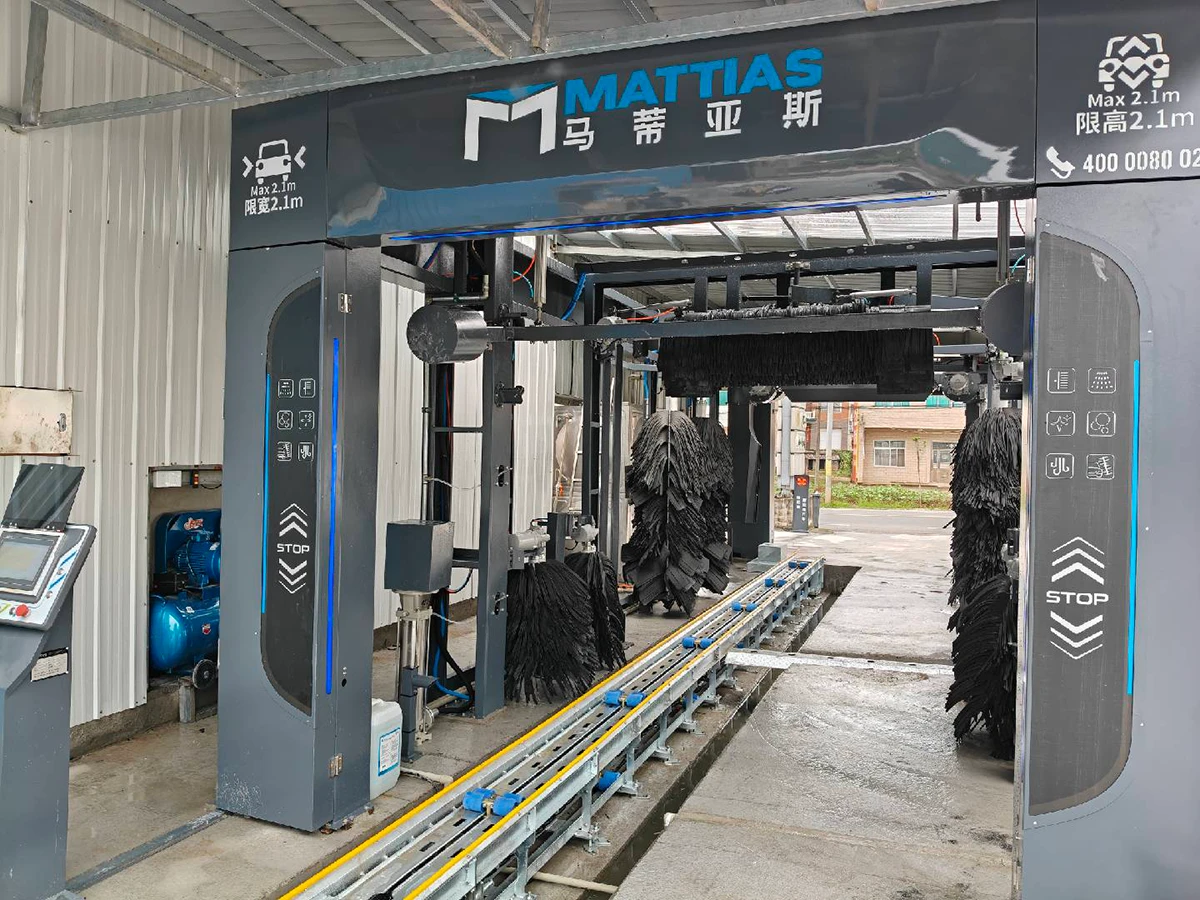
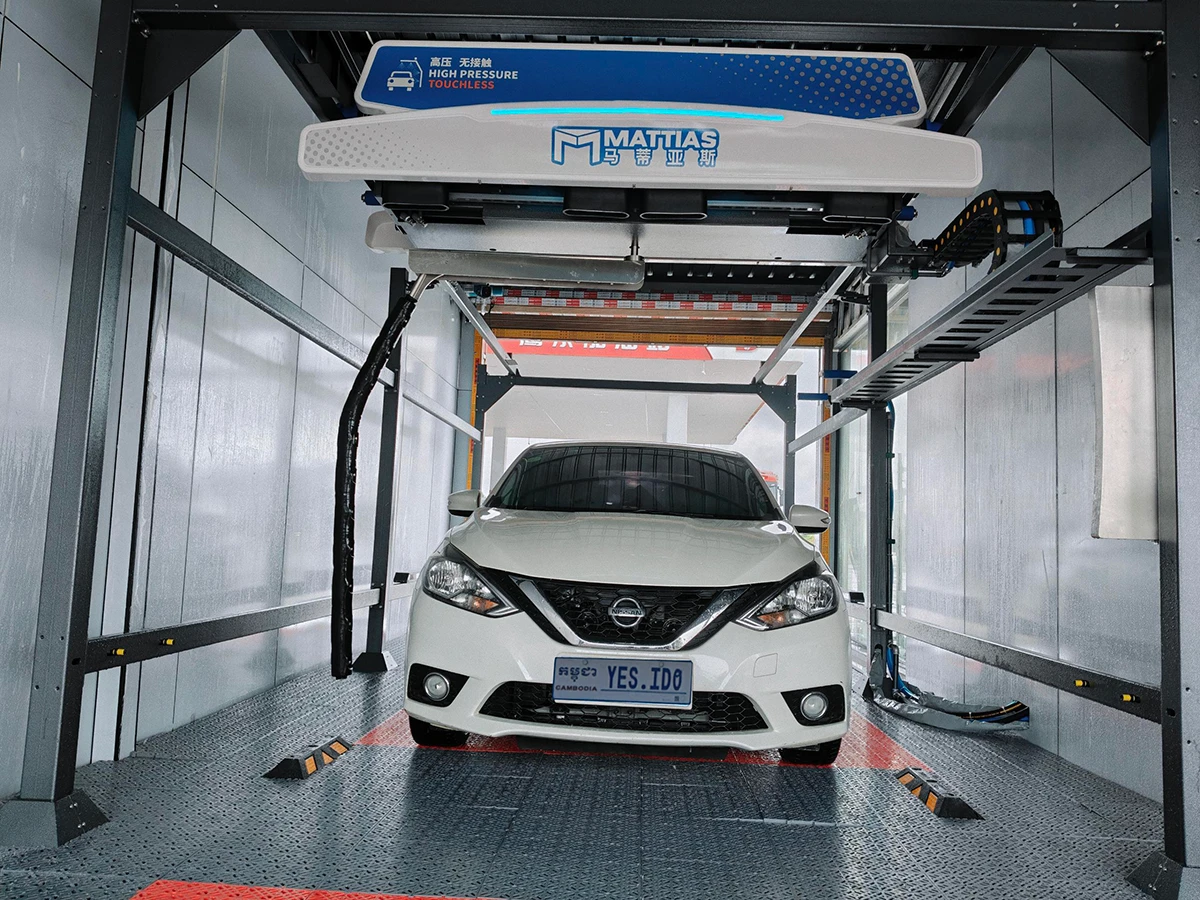
For single-bay or limited-footprint sites, a touchless rollover is the standard IBA format. These machines move over a stationary vehicle using high-pressure water jets and chemical foams — no brushes, no cloth contact, no risk of scratching.
The Mattias M-LM216 Rollover Touchless Car Wash Machine is a compact, modern touchless rollover well-suited to gas station locations and single-bay setups. For operators who want a higher-throughput or more feature-rich rollover, the M-LM535 Professional Fully Automatic Rollover Car Wash Machine delivers a premium wash experience with full automation and robust build quality designed for high-volume environments.
Both machines are built with modern engineering standards that significantly reduce the frequency of breakdowns compared to legacy equipment.
Gantry / In-Bay Touchless Machines
If your site can accommodate a larger footprint, gantry-style touchless machines offer faster cycle times and expanded wash programs.
The Mattias M-WS100, M-WS210, and M-WS310 represent a stepped range of gantry touchless systems, from entry-level to professional-grade, making them suitable for operators at different stages of growth.
Tunnel Systems for High-Volume Sites
For operators considering a step up to a conveyor-based setup — or for investors evaluating higher-throughput sites — tunnel car wash machines represent the premium end of the market.
The Mattias M-SD0900Q Pneumatic Tunnel Car Wash Machine and M-SD0900D Tunnel Car Wash Machine are engineered for serious throughput. For the highest-volume conveyor operations, the SD1800Q 40m Conveyor Car Wash Equipment is a full-length express tunnel solution.
Self-Service as a Complementary Revenue Stream
Many operators overlook the value of adding a self-service bay alongside an IBA. The Mattias M-F761AX Self-Service Car Wash Station allows customers to wash their own vehicles — generating revenue with minimal equipment wear and virtually no labor cost per transaction.
Does Equipment Age Matter More Than Membership Programs?
This is one of the more nuanced debates among IBA operators — and the answer is: yes, at most volume levels, equipment reliability matters more than membership programs.
Several experienced operators make this point clearly. Adding a membership program (unlimited monthly washes) to a busy site will increase wash counts — sometimes significantly. But more washes mean more wear on the machine. If your IBA is already struggling with reliability, a membership-driven volume spike can accelerate breakdown frequency rather than improve profitability.
One operator who ran unlimited memberships for a full year at an IBA noted that while car counts rose and revenue ticked slightly upward, the increased wear, additional management overhead from membership admin, and higher maintenance frequency made the program a net negative for their operation. They discontinued memberships and wouldn’t return to the model.
The sequencing matters:
- First, get your equipment reliable (new or thoroughly refurbished)
- Then, if your volume and throughput support it, evaluate memberships
An operator averaging 70 cars per day (CPD) may find that memberships can push counts to 100+ CPD — but that also means a machine that was sized for 70 CPD is now doing 30–40% more work. That math needs to be modeled carefully before committing.
The Staffing Side: How to Actually Leave for a Week
Here’s what operators who’ve achieved a degree of business freedom consistently describe as the real solution — it’s not just the machine. It’s the people.
The most practical path to leaving for a week or two without anxiety involves:
1. A Dependable Site Manager Someone who knows the equipment well enough to handle daily issues, coordinate with your chemical supplier, and call you only for genuine emergencies. As one 25-year operator put it: the only way to actually step away is having someone dependable on site.
2. A Service Contract For anything above your manager’s skill level, a standing agreement with your equipment distributor or a qualified service company means rapid response when something goes wrong. Your manager calls them; you get a text.
3. Remote Monitoring Modern pay stations and IBA systems increasingly support remote monitoring and control. Being able to check wash counts, view camera feeds, and remotely address customer service issues removes a huge amount of anxiety from being off-site.
4. Documented Processes A written runbook for daily checks, chemical top-ups, and common minor issues means your staff can handle 80% of problems without you — even if they don’t have deep mechanical knowledge.
The Honest ROI Conversation: New Machine vs. Refurbish vs. Sell
Before committing to a major equipment investment, experienced operators suggest working through the math honestly.
Option 1: Refurbish the existing machine
A comprehensive overhaul — new bridge and trolley motors, arch rotate, all proximity and ultrasonic sensors, start/stop sensors, and hoses — can restore a machine to near-new reliability. Depending on what your machine needs, this might run $30,000–$50,000 and extend reliable service life by several years. For operators with good bones on the machine and relatively lower volume, this can represent better short-term ROI than full replacement.
Option 2: New IBA equipment
A modern touchless IBA increases reliability, often comes with improved chemistry delivery and wash quality, and adds resale value to the site. If the current machine is beyond economical repair, or if you’re planning to sell within 5–7 years and want to maximize sale price, new equipment is often the right call.
Option 3: Sell the business
It’s worth saying plainly: if the goal is true passivity, selling a car wash and deploying the capital elsewhere may be more efficient than endlessly optimizing operations. The operators who build genuinely low-stress car wash businesses typically still have skin in the game — they’ve just systematized well.
FAQ: Making a Car Wash More Passive
Q: Can a single-IBA car wash be run completely remotely? Realistically, no. Even a well-run, modern IBA requires on-site presence for daily cleaning, chemical management, and minor maintenance. What changes with better equipment and systems is how frequently and urgently you’re needed — not whether you’re needed at all.
Q: How many cars per day do I need to justify a new IBA investment? There’s no universal answer, but operators generally consider 50+ CPD the floor for a new IBA investment to pencil out over a standard 7-year depreciation horizon. At 70+ CPD, the ROI case becomes stronger — especially when improved reliability reduces downtime-related revenue losses.
Q: Is a touchless rollover less maintenance than a friction (brush) machine? Touchless machines eliminate many of the wear items associated with friction systems — brush replacement, cloth washing, and mitter wear. However, they rely heavily on high-pressure pump systems, chemical dosing accuracy, and sensor performance. “Less maintenance” doesn’t mean “no maintenance.”
Q: Should I add membership programs before or after upgrading equipment? After. Get your machine reliable first. A membership program that drives 30% more volume through a struggling machine will accelerate its failure, not improve profitability.
Q: What’s the biggest mistake IBA owners make when trying to reduce workload? Adding complexity (new programs, higher volumes, more services) to an aging, unreliable machine. Volume improvements only pay off when the equipment is ready to handle them without excessive downtime.
Q: How do I evaluate whether my current machine is worth refurbishing? Get a quote from a qualified service company for a full restoration. Compare that to: (a) the cost of a comparable new machine on a monthly payment basis, and (b) your current monthly maintenance spend. If refurbishment costs approach 40–50% of replacement cost, new equipment is usually the better long-term investment.
Q: Does new equipment really help when I want to sell the business? Yes, consistently. Buyers discount heavily for aging equipment — and often make refurbishment a condition of sale at a reduced price. A recently upgraded machine with documented service history commands a meaningful valuation premium.
Summary: Build a More Manageable Car Wash, Step by Step
If you’re an IBA operator looking to reduce operational stress and build a business that doesn’t require your constant presence, the path forward looks like this:
- Assess your current equipment honestly — if it’s generating frequent, unpredictable breakdowns, that’s your first problem to solve
- Invest in modern, reliable touchless IBA equipment — brands and models with strong service networks and modern engineering standards make a measurable difference
- Build a staffing layer — a dependable manager with a clear escalation process is irreplaceable
- Set up a service contract — for anything above daily operations
- Then evaluate membership programs — once your machine can handle increased volume reliably
Mattias Car Wash offers a full range of touchless IBA and tunnel systems designed for operators who prioritize reliability, wash quality, and low lifecycle maintenance costs. From the compact M-LM216 rollover to the high-throughput SD1800Q conveyor tunnel, our equipment line is built for operators who want to run a serious business — not chase breakdowns.