










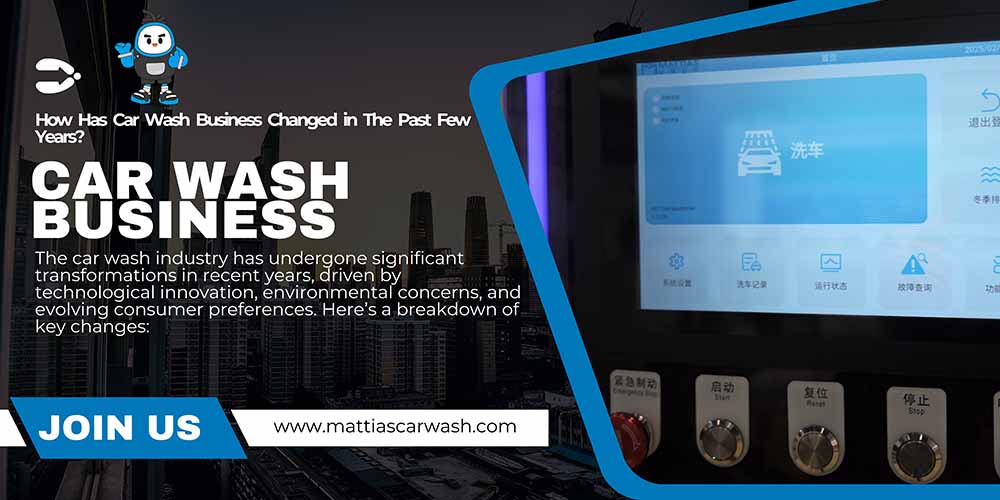

The car wash industry has undergone significant transformations in recent years, driven by technological innovation, environmental concerns, and evolving consumer preferences. Here’s a breakdown of key changes:
1. Technology & Automation
- Touchless Car Wash Systems: Advanced sensors, AI, and high-pressure water jets enable thorough cleaning without physical contact, reducing scratches and appealing to customers wary of damage.
- Mobile Apps & Digital Integration: Customers now book washes, pay, and track loyalty points via apps. IoT-enabled systems optimize operations, like adjusting water usage based on vehicle size.
- Data-Driven Insights: Businesses use analytics to predict demand, personalize marketing, and manage inventory, improving efficiency.
2. Sustainability Focus
- Water Recycling: Up to 80-90% of water is now recycled in modern facilities due to stricter regulations and eco-conscious branding.
- Biodegradable Products: Shift toward pH-neutral, chemical-free cleaners to meet environmental standards and attract green-minded customers.
- Energy Efficiency: Solar panels and LED lighting reduce operational costs and carbon footprints.
3. Business Model Innovations
- Subscription Services: Unlimited wash plans (e.g., $20-$40/month) foster customer loyalty and steady revenue, replacing pay-per-visit models.
- Convenience Expansion: Partnerships with gas stations, grocery stores, or standalone “express” sites offer faster service (10-minute washes) for time-poor consumers.
- Market Consolidation: Large chains (e.g., Mister Car Wash, Quick Quack) acquire independents, leveraging economies of scale and standardized branding.
4. Customer Experience Upgrades
- Multi-Channel Memberships: Integration with apps like GasBuddy or insurance providers rewards customers with discounted washes.
- Ancillary Services: Adding detailing, oil changes, or EV charging stations creates one-stop hubs, boosting revenue per visit.
- Luxury Add-Ons: Ceramic coatings, odor removal, and interior sanitizing cater to premium markets.
5. External Shocks & Adaptations
- COVID-19 Impact: Contactless payment and sanitization marketing became critical during the pandemic, accelerating tech adoption.
- Labor Challenges: Automation addresses rising labor costs and shortages, though skilled technicians are needed for equipment maintenance.
- EV Adaptation: Rising electric vehicle ownership spurs demand for specialized cleaning (battery compartment care, gentler washes).
6. Global & Regional Trends
- Urban Growth: High-density cities see demand for compact, automated washes due to limited space and busy lifestyles.
- Emerging Markets: Countries with growing middle classes (e.g., India, Brazil) experience car wash sector expansion, often blending traditional and modern models.
7. Regulatory Pressures
- Water Usage Limits: Regions prone to droughts (e.g., California) mandate recycling systems, pushing smaller operators to upgrade or exit.
- Chemical Restrictions: Bans on phosphates and other pollutants drive innovation in cleaning solutions.
Future Outlook
The industry is likely to see further consolidation, AI-driven customization (e.g., wash cycles tailored to road salt levels), and expanded sustainability mandates. Businesses blending convenience, tech, and eco-friendliness will thrive, while slower adopters may struggle.
Would you like more details on any specific trend? 🚗💦
