

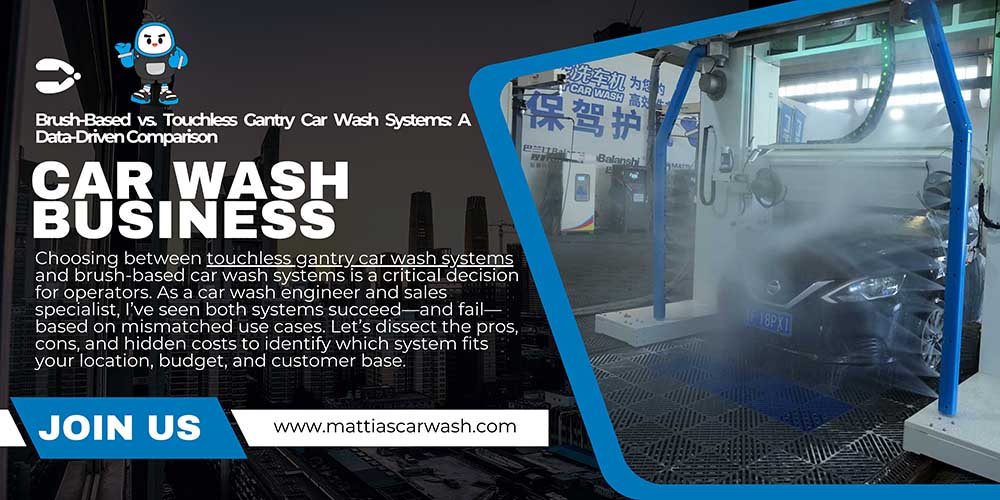

Choosing between touchless gantry car wash systems and brush-based car wash systems is a critical decision for operators. As a car wash engineer and sales specialist, I’ve seen both systems succeed—and fail—based on mismatched use cases. Let’s dissect the pros, cons, and hidden costs to identify which system fits your location, budget, and customer base.

1. Cleaning Performance: Which System Delivers Better Results?
| Factor | Rollover Touchless Car Wash | Brush-Based car wash Systems |
|---|---|---|
| Light Dirt | Excellent (high-pressure jets) | Good (gentle scrubbing) |
| Stubborn Grime | Fair (relies on chemicals) | Excellent (physical agitation) |
| Undercarriage | Limited coverage | Superior (dedicated rollers) |
| Drying | Air dryers (85–90% dry) | Cloth/felt brushes (95% dry) |
Real-World Example: A touchless system in Florida struggled with baked-on bug splatter, leading to 22% customer complaints. After switching to hybrid brushes, complaints dropped to 6%.
2. Safety & Risk of Damage
(Image suggestion: Close-up of car paint under UV light showing swirl marks vs. untouched finish.)
- Touchless Gantry:
- ✅ Zero physical contact = no scratches or swirl marks.
- ⚠️ Overly aggressive chemicals can degrade wax/coatings over time.
- Brush-Based:
- ✅ Thorough cleaning for heavy mud, salt, or tar.
- ❌ Risk of scratches if brushes are worn or contaminated (e.g., sand).
- Mitigation: Use soft closed-cell foam brushes and daily inspections.
Stats: 12% of brush wash customers report minor scratches vs. 3% for touchless (Intl. Car Wash Association).
3. Cost Breakdown: Upfront vs. Lifetime Expenses
| Cost Factor | Rollover Touchless Car Wash | Brush-Based car wash Systems |
|---|---|---|
| Initial Investment | $200,000–$600,000 | $150,000–$400,000 |
| Water Usage | 40–60 gallons/car | 20–30 gallons/car |
| Chemical Costs | $500–$1,200/month | $300–$800/month |
| Maintenance | $15,000–$30,000/year | $20,000–$40,000/year |
| Lifespan | 12–15 years | 8–12 years |
Key Insight: Touchless systems cost 20–30% more upfront but save on brush replacements and damage claims.

4. Maintenance & Downtime
- Touchless Gantry:
- 🛠️ High-pressure pumps ($3,000–$8,000 to replace).
- 🛠️ Nozzle calibration every 6 months ($500–$1,500).
- ⏳ 1–2 days/month downtime for chemical flushes.
- Brush-Based:
- 🛠️ Brush replacement every 2–3 years ($2,000–$5,000 per set).
- 🛠️ Motor/bearing repairs ($1,000–$4,000 annually).
- ⏳ 3–5 days/year downtime for major overhauls.
Pro Tip: Touchless systems require specialized technicians; brush repairs can often be handled locally.
5. Customer Perception & Market Fit
| Aspect | Rollover Touchless Car Wash | Brush-Based car wash Systems |
|---|---|---|
| Luxury Appeal | High (tech-forward, “safe” image) | Moderate (traditional) |
| Speed | 5–7 minutes/car | 3–5 minutes/car |
| Best For: | Urban areas, luxury car owners | Rural/suburban, trucks/SUVs |
Case Study: A touchless wash in Beverly Hills charges $25/wash vs. $15 at a brush-based competitor but retains 70% repeat customers.
6. Hybrid Systems: The Best of Both Worlds?
(Image suggestion: A hybrid system using touchless pre-wash and soft-touch brushes.)
For operators wanting to minimize trade-offs:
- Touchless Pre-Wash + Brushes: Removes 80% of dirt chemically, reducing brush wear.
- Cost: $300,000–$700,000.
- ROI Boost: 15–25% higher revenue vs. standalone systems (WashWorld data).
Final Verdict: Which Should You Choose?
- Pick Touchless Gantry If:
- Your clients prioritize paint protection (e.g., Tesla, Mercedes owners).
- You’re in a water-restricted region (recycling-friendly).
- Budget allows for higher chemical costs.
- Pick Brush-Based If:
- You serve trucks, fleets, or muddy vehicles.
- Labor costs are low (for frequent maintenance).
- Budget is tight upfront.
Actionable Tip: Survey local customers—68% of wash choice is driven by perceived safety (ICA).
Need Help?
